

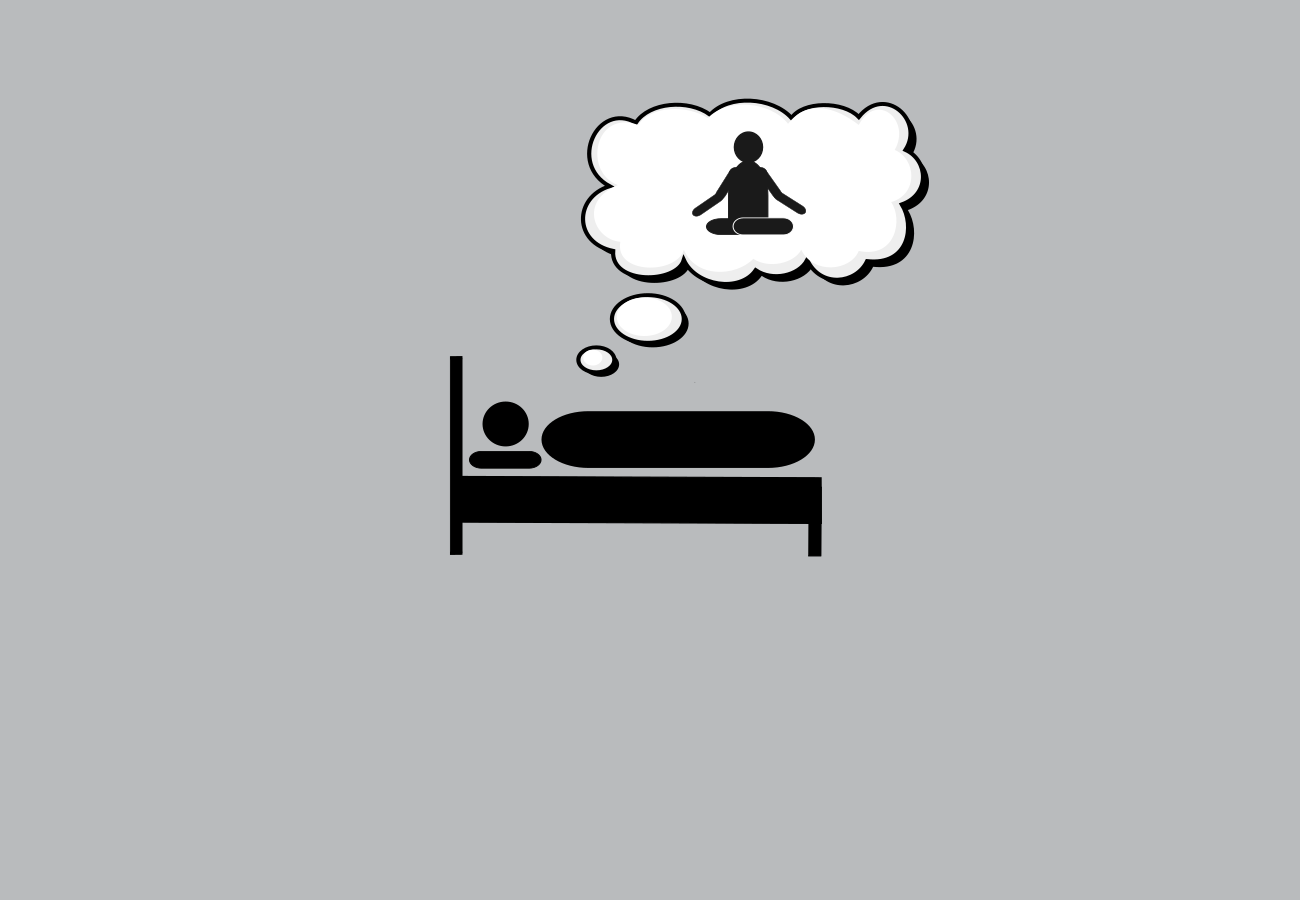
relaxONnaming® body sensations to fall asleep
The following procedure is recommended
- lie down and switch off the light,
- adopt a comfortable posture,
- focus your observation on individual senses: what you touch, feel or hear,
- name the associated experience,
- only ever use one (!) word when naming,
- say the word silently to yourself,
- take a short pause after each word,
- in which you feel, sense or hear something else and
- continue the exercise until your mind has calmed down.
It takes a little time for the thoughts you were previously preoccupied with to calm down and for the restlessness to subside.
Important note
Observing and naming body sensations is merely a matter of spatial orientation. Restlessness needs time to settle. A little patience is therefore necessary and helpful. If the restlessness persists, the exercise can be ended at any time by concentrating on another task or activity.
Do not use relax on naming when driving a vehicle or operating machinery, as it can cause you to fall asleep when you are already tired.
Relax on naming body sensations can help to shorten waking phases and brooding and to find inner peace to fall asleep.
Example - sense of touch, sense of temperature, sense of movement, sense of hearing
The day had once again brought a lot of trouble. He had been lying awake in bed for a while and wanted to fall asleep. Instead, he continued to think about the difficulties and events of the day. So he decided to try to fall asleep by relaxing through observing and naming bodily sensations. He closed his eyes and breathed in and out calmly. He chose the sense of touch first and felt how the pillow felt against his cheek. It felt soft. He pronounced the word “soft” in his mind. He moved his head slightly. The pillow gave slightly with the movement and felt cozy. He said the word “cozy” in his mind. Then he switched to the sense of movement. He moved slightly on the mattress. It felt very comfortable. In his mind he said the word: “Comfortable”. Then he switched to the sense of temperature. It was pleasantly warm under the comforter. In his mind he said the word: “Warm”. He switched back to his sense of touch. His hand lay calmly on the sheet. It felt smooth. In his mind he said the word: “Smooth”. It felt good to just lie there. In his mind he said the word: “Good”. The comforter on his body was not heavy. It felt lightweight. In his mind he said the word: “Light”. He switched to his sense of hearing and listened to the silence. He heard nothing. In his mind he said the word: “Silence”. After a short time, he heard bells ringing. In his mind he said the word: “Bell”. A couple was walking down the street and talking. In his mind he said the word: “Couple”. He listened again in his room. It was still quiet. In his mind he said the word: “Quiet”. His cat walked past the bedroom. In his mind he said the word: “Cat”. He continued the exercise until he felt an inner calm. Then he finished the exercise and surrendered to his inner peace.
Practical application
On his exploration tour in bed, he observed what he could perceive with his various senses and said the respective word silently to himself in his mind: Soft … short pause, in which his attention continues to wander quietly … cozy … short pause, in which his attention continues to wander quietly … comfortable … short pause, in which his attention continues to wander quietly … warm … short pause, in which his attention continues to wander quietly … smooth … short pause in which attention continues to wander calmly … good … short pause in which attention continues to wander calmly … light … short pause … silence … short pause … bell … short pause … couple … short pause … quiet … short pause … cat … short pause …
© 2025 PIRKA® Wolfgang Smidt. The content provided on this website is protected by copyright. Any use requires the prior written consent of the author. The information and advice provided has been compiled to the best of our knowledge and carefully checked. However, it is no substitute for expert psychological and medical advice in individual cases.
Give it a try!
PIRKA wishes you every success in implementing it.
Literature
Baltissen, R. & Sartory, G. (1998). Orientierungs-, Defensiv- und Schreckreaktionen: Grundlagenforschung und Anwendung. In Rösler, F. (Hrsg.). Ergebnisse und Anwendungen der Psychophysiologie. Enzyklopädie der Psychologie. Biologische Psychologie. (S. 1-35)
Bateson, G. (1981). Ökologie des Geistes. Frankfurt. Suhrkamp.
Bösel, R. (2009). Neuropsychologie. In Brandstätter, V. & Otto, J. H. (Hrsg.). Handbuch der Allgemeinen Psychologie. Motivation und Emotion. Göttingen: Hogrefe.
Dörner, D. (1998). Emotionen, kognitive Prozesse und der Gebrauch von Wissen. In Klix, F. & Spada, H. (Hrsg.), Enzyklopädie der Psychologie. Wissen. Kognition. (S. 301-330). Göttingen: Hogrefe.
Eimer, M., Nattkemper, D., Schröger, E & Prinz, W. (1996). Unwillkürliche Aufmerksamkeit. In O. Neumann & A. F. Sanders (Hrsg.), Enzyklopädie der Psychologie. Aufmerksamkeit. Kognition 2 (S. 219-258). Göttingen: Hogrefe.
Gamer, M. (2019). Aufmerksamkeit. In Pinel, J. P. J., Barnes, S. J. & Pauli, P. (Hrsg.). Biopsychologie. München: Pearson.
Goldstein, E. B. & Cacciamani, L. (2023). Wahrnehmungspsychologie. Berlin: Springer.
Grawe, K. (2004). Neuropsychotherapie. Göttingen: Hogrefe.
Herrmann, T. (2003). Planung und Regulation der Sprachproduktion. In Herrmann T. & Grabowski, J. (Hrsg.), Enzyklopädie der Psychologie. Sprachproduktion. Sprache 1 (S. 309-327). Göttingen: Hogrefe.
Hoffmann, J. (1994). Die visuelle Identifikation von Objekten. In Prinz, W. & Bridgeman, B. (Hrsg.), Enzyklopädie der Psychologie. Wahrnehmung. (S. 391-444). Göttingen: Hogrefe.
Kiesel, A. & Koch, I. (2022). Wahrnehmung und Aufmerksamkeit. In Kiesel, A. & Spada, H. (Hrsg.). Lehrbuch Allgemeine Psychologie. Bern. Hogrefe.
Kintsch, W. (1982). Gedächtnis und Kognition. Heidelberg: Springer.
Klein, R. M. & Ivanoff, J. (2005). Inhibition of Return. In Itti, L., Rees, G. & Tsotsos, J. K. (Eds.). Neurobiology of Attention. Amsterdam: Elsevier Academic Press.
Klix, F. (1976). Information und Verhalten. Kybernetische Aspekte der organismischen Informationsverarbeitung. Bern: Huber.
Klix, F. (1976). Über Grundstrukturen und Funktionsprinzipien kognitiver Prozesse. In F. Klix (Hrsg.). Psychologische Beiträge zur Analyse kognitiver Prozesse. Kindler: München.
Klix, F. (1998). Begriffliches Wissen – episodisches Wissen. In Klix, F. & Spada, H. (Hrsg.), Enzyklopädie der Psychologie. Wissen. Kognition. (S. 167-205). Göttingen: Hogrefe.
Koelega, H.S. (1996). Vigilanz. In O. Neumann & A. F. Sanders (Hrsg.), Enzyklopädie der Psychologie. Aufmerksamkeit. Kognition 2 (S. 403-467). Göttingen: Hogrefe.
Lau, F. (2012). Die Form der Paradoxie. Eine Einführung in die Mathematik und Philosophie der Laws of Form von George Spencer Brown. Heidelberg: Carl-Auer.
Luhmann, N. (1998). Die Wissenschaft der Gesellschaft. Frankfurt: Suhrkamp.
Luhmann, N. (2004). Einführung in die Systemtheorie. Heidelberg: Carl Auer.
Manzey, D. (1998). Psychophysiologie mentaler Beanspruchung. In F. Rösler (Hrsg.), Enzyklopädie der Psychologie. Ergebnisse und Anwendungen der Psychophysiologie. Biologische Psychologie. (S. 799-850). Göttingen: Hogrefe.
Moosbrugger, H. & Oehlschlägel, J. (2019). FAIR-2. Frankfurter Aufmerksamkeits-Inventar 2. (2., überarb. u. erg. Auflage des FAIR 1996). Göttingen: Hogrefe.
Müller, H. & Krummenacher, J. (2012). Funktionen und Modelle der selektiven Aufmerksamkeit. In Karnath, H-O. & Thier, P. (Hrsg.). Kognitive Neurowissenschaften. Berlin: Springer.
Norman, D. & Bobrow, G. (1975). On Data-limited and Ressource-limited Processes. Cognitive Psychology, 7, 44-64
Olst, E. H. ((1971). The Orienting Reflex. Mouton. De Gruyter.
Pechmann, T. (2003). Experimentelle Methoden. In Herrmann T. & Grabowski, J. (Hrsg.), Enzyklopädie der Psychologie. Sprachproduktion. Sprache 1 (S. 27-45). Göttingen: Hogrefe.
Pinel, J. P. J., Barnes, S. J. & Pauli, P. (2019). Biopsychologie. München: Pearson.
Schönwälder, T., Wille, K. & Hölscher, T. (2004). George Spencer-Brown. Eine Einführung in die „Laws of Form“. Wiesbaden: VS Verlag.
Schandry, R. (2016). Biologische Psychologie. Weinheim: Beltz.
Schweizer, K. (2003). Das sprachliche Lokalisieren. In Herrmann T. & Grabowski, J. (Hrsg.), Enzyklopädie der Psychologie. Sprachproduktion. Sprache 1 (S. 623-652). Göttingen: Hogrefe.
Semmer, N. K., Grebner, S. & Elfering, A. (2010). Psychische Kosten von Arbeit: Beanspruchung und Erholung, Leistung und Gesundheit. In U. Kleinbeck & K. H. Schmidt (Hrsg.), Enzyklopädie der Psychologie. Arbeitspsychologie. (S. 325-358). Göttingen: Hogrefe.
Sokolov, E. N., Spinks, J. A., Näätänen, R. & Lyytinen, H. (2002). The Orienting Response in Information Processing. London: Lawrence Erlbaum Associates.
Sokolov, E. N. (2013). The Psychophysiology of Conciousness. New York: Oxford University Press.
Spencer-Brown, G. (1979). Laws of Form. New York: Dutton.
Sturm, W. (2008). Aufmerksamkeitsstörungen. In Gauggel, S. & Herrmann, M. (Hrsg.). Handbuch der Neuro- und Biopsychologie. Göttingen: Hogrefe.
Tucker, D. M. & Williamson, P. A. (1984). Asymmetric Neural Control Systems in Huma Self-Regulation. Psychological Review. Vol. 91, No. 2, 185-215
van der Meer, E. & Klix, F. (2003). Die begriffliche Basis der Sprachproduktion. In Herrmann T. & Grabowski, J. (Hrsg.), Enzyklopädie der Psychologie. Sprachproduktion. Sprache 1 (S. 333-355). Göttingen: Hogrefe.
van der Molen, M.W. (1996). Energetik und der Reaktionsprozess. Zwei Leitlinien der Experimentalpsychologie. In O. Neumann & A. F. Sanders (Hrsg.), Enzyklopädie der Psychologie. Aufmerksamkeit. Kognition 2 (S. 333-395). Göttingen: Hogrefe.
Weiß, P. & Barattelli, S. (2003). Das Benennen von Objekten. In Herrmann T. & Grabowski, J. (Hrsg.), Enzyklopädie der Psychologie. Sprachproduktion. Sprache 1 (S. 587-615). Göttingen: Hogrefe.


Active reliefs that support our ability to concentrate
The following procedure is recommended
Avoid working on tasks at the same time. It leads to faster fatigue.
Divide tasks into work steps. Proceed step by step.
Alternate between tasks of varying difficulty throughout the day. Activities with high mental demands (analysis) should be followed by activities with low mental demands (routine activities). Plan the workflow accordingly throughout the day.
Examples of active relief are
- Go to the toilet on another floor.
- Use stairs instead of an elevator.
- Making phone calls while standing.
- See colleagues in their office if you have any queries.
- Work on files while standing at the desk / high table.
- Hold conversations with colleagues at the bar table / desk.
- Pick up documents in person or bring them by.
- Leave the office / workplace for breaks.
- Walk longer and shorter distances quickly.
Active reliefs at the workplace help to support general well-being and the ability to concentrate.
Example 1 - Changing posture
Sitting at his desk, he kept noticing his tense and stooped posture. His back was clearly noticeable after a few hours of work and sometimes hurt. He needed to find a balance.
Practical application
The next time the phone rang, he got up from his chair and then picked up the receiver. Standing up to make a call wasn’t so bad. He even noticed a positive change in his voice. He also felt more present and more attentive to the caller. So he resolved to make at least 10 calls standing up. He kept a daily tally in his desk calendar and added up the tally marks at the end of the day. This actually gave him a good feeling when he left his desk. The next day, he would keep another tally sheet. He also reactivated the high table from the cellar, which he used to set up at parties. The upright posture when editing texts or working on his laptop did him good.
Example 2 - more exercise is good for you
Her colleague had sent her an email asking for a quick response, even though she was sitting just two offices away from her. She missed the personal conversation.
Practical application
She tucked the documents under her arm and paid her colleague a visit. She was surprised, but pleased about the personal exchange. On the way back, she remembered that she still needed information from production. Instead of phoning as usual, she went to see her colleagues in person. When crossing the company premises, she walked more quickly, which was good for her. Other issues could be discussed in person. Back in the main building, she decided to take the stairs. As she walked past the elevator, a colleague held the door open for her as it was closing. “That’s very kind of you,” she replied, ”but today I’m using the stairs. Thank you very much.”
© 2025 PIRKA® Wolfgang Smidt. The content provided on this website is protected by copyright. Any use requires the prior written consent of the author. The information and advice provided has been compiled to the best of our knowledge and carefully checked. However, it is no substitute for expert psychological and medical advice in individual cases.
You can also use
PIRKA® Early warning signs of decreasing concentration
PIRKA® Early warning signs of lack of concentration
PIRKA® Understanding concentration problems and mental burnout
PIRKA® exhaustionE – Protocol 50-10 and 25-5
PIRKA® Hunger and ability to concentrate
PIRKA® observe, name and evaluate burnout
PIRKA® Noticing work disturbances
Give it a try!
PIRKA wishes you every success in implementing it.
Literature
Allmer, H. (1994). Psychophysische Erholungseffekte von Bewegung und Entspannung. In R. Wieland-Eckelmann (Hrsg.). Erholungsforschung: Beiträge der Emotionspsychologie, Sportpsychologie und Arbeitspsychologie. Weinheim: Beltz.
Demerouti, E., Fergen, A., Glaser, J., Herbig, B., Hofmann, A., Nachreiner, F., Packebusch, L. & Seiler, K. (2012). Psychische Belastung und Beanspruchung am Arbeitsplatz. Inklusive DIN EN 10075-1 bis -3. Herausgeber: DIN Deutsches Institut für Normierung e.V. Berlin: Beuth.
Leahy, R.L. (2007). Techniken kognitiver Therapie. Paderborn: Junfermann.
Löhr, G. & Preiser, S. (1974). Regression und Recreation – Ein Beitrag zum Problem Stress und Erholung. Zeitschrift für experimentelle und angewandte Psychologie. Band XXI, 4, 575-591.

Noticing work disturbances
The following procedure is recommended
- The time it takes to notice and correct errors increases significantly.
- Usual work performance is only possible in phases.
- Change decision criteria. You become more open to alternatives.
- Goals change. Looking for quick solutions. Close goals dominate.
- Carelessness during activities. Overlooking details.
- The frequency of errors is increasing.
- Starting activities is difficult.
- Re-checking activities is increasing.
- Opinions are formed too quickly, followed by rigid adherence to them.
- It is more difficult to make a decision.
- Work more slowly to make sure that everything is correct.
- Indifference to your own mistakes is increasing.
Noticing work disturbances helps to initiate due breaks.
Example 1 - of work disorders in everyday life
He read the text of the e-mail for the third time and still found spelling mistakes (the frequency of mistakes is increasing. The time it takes to notice and correct errors is increasing significantly). This cost him valuable time. He still had to write a detailed report. A preliminary short report had to suffice. Hopefully no one would ask questions (Goals change. Looking for quick solutions. Close goals dominate). He noticed clear concentration problems (Usual work performance is only possible in phases) and he had difficulty maintaining his usual pace of work (Starting activities is difficult).
Practical application
Work disorders are usually the result of mental fatigue and exhaustion. PIRKA suggests relaxONnaming® during the pause, relaxONnaming® the surroundings and relaxONnaming® colours as a time-out.
Example 2 - of work disorders in everyday life
The customer complained on the phone that goods were missing. In fact, she had forgotten to include a product. However, due to the existing amount of work, she no longer took such complaints to heart (Indifference to her own mistakes was increasing). She noticed a creeping insecurity about whether she was processing everything correctly and preferred to double-check (working more slowly to make sure everything was correct. Re-checking activities is increasing).
Practical application
Taking a “real break” means doing something that can be implemented quickly and promotes mental alertness. PIRKA suggests relaxONnaming® during the pause, relaxONnaming® the surroundings and relaxONnaming® colours as a time-out.
© 2025 PIRKA® Wolfgang Smidt. The content provided on this website is protected by copyright. Any use requires the prior written consent of the author. The information and advice provided has been compiled to the best of our knowledge and carefully checked. However, it is no substitute for expert psychological and medical advice in individual cases.
You can also use
PIRKA® Early warning signs of decreasing concentration
PIRKA® Early warning signs of lack of concentration
PIRKA® Active reliefs that support our ability to concentrate
PIRKA® Understanding concentration problems and mental burnout
PIRKA® exhaustionE – Protocol 50-10 and 25-5
PIRKA® Hunger and ability to concentrate
PIRKA® observe, name and evaluate burnout
Give it a try!
PIRKA wishes you every success in implementing it.
Literature
Franke, G.H. (2002). Symptom-Checkliste SCL-90-R von L.R. Derogatis. Beltz. Göttingen.
Frankenhaeuser, M. (1981). Coping with Stress at Work. International Journal of Health Services. Volume 11, Number 4, 491-510.
Schmidtke, H. (1981). Lehrbuch der Ergonomie. 2. Auflage. Hanser. München.
Overcoming the must
The following procedure is recommended
When completing tasks or dealing with people, remember to
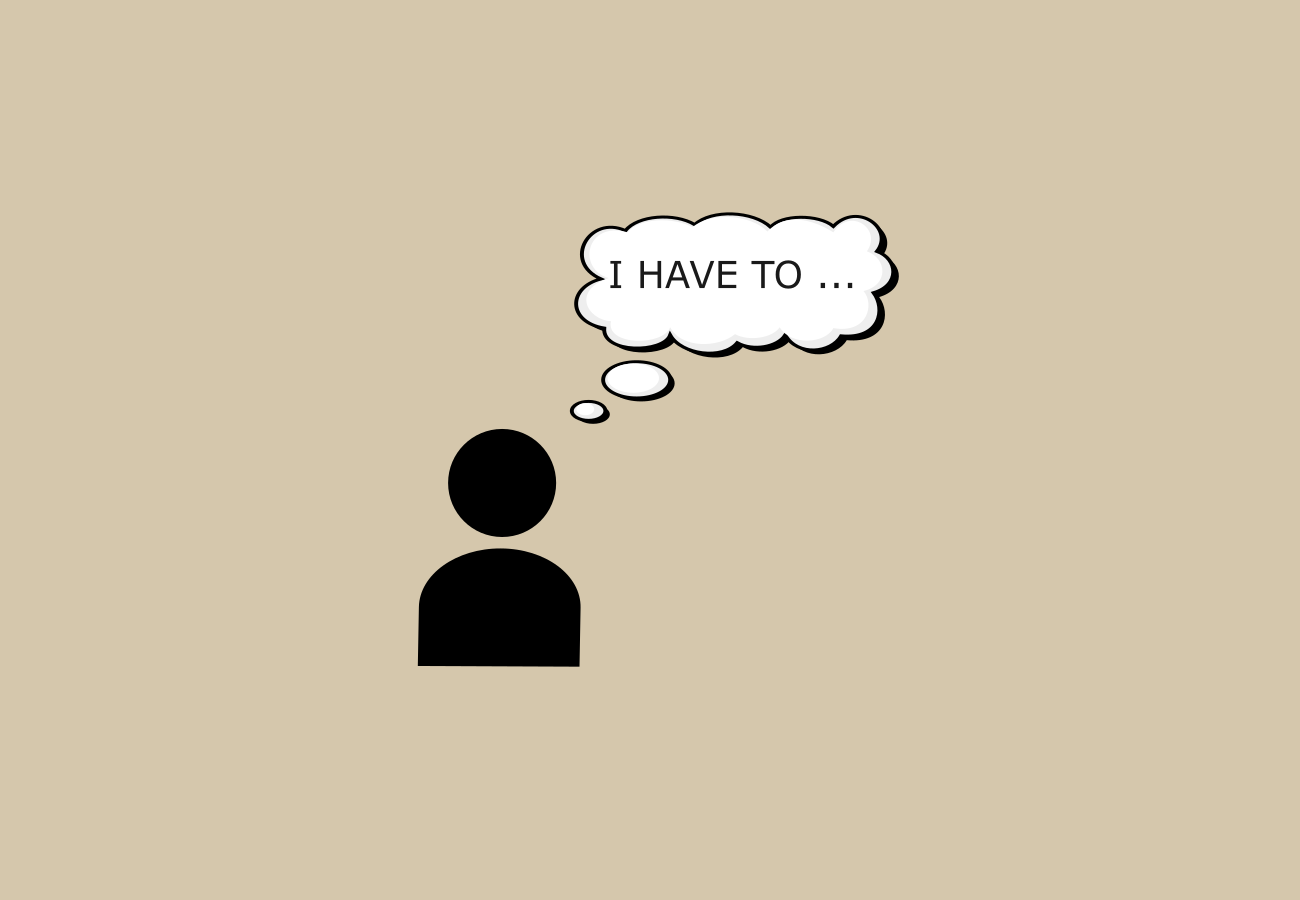
- replace the words “I must” with “It would be nice if …”.
Replacing the demand of "I must" can help to reduce inner tension and achieve goals more easily.
Example 1 - High jump
He had set his sights high for this competition. The time would come in 30 minutes. He had to jump over the 2-meter mark. He felt a great deal of inner tension. What if he didn’t succeed? A feeling of fear spread. There was no alternative for him! What if he didn’t make it? No, it had to be 2 meters!
Practical application
He realized how the demands on his own performance put him under a lot of pressure. How could he alleviate the pressure? Did he really have to? He thought that it would be nice if he could do it today. This new view brought a noticeable sense of relief. The pressure lifted slightly. Even with this new view, it would be possible for him to reach 2 meters. Another aspect occurred to him: would he be happy if he could do it with the claim “I have to”? Good question! Because the 2 meters were the least he had to achieve with this requirement. He decided to take the new view: it would be nice if I could do it and looked forward to the next jump.
Example 2 - All colleagues must like me
She often felt tense and depressed among her colleagues. The feeling was particularly strong when her colleagues were not friendly towards her or looked funny. She thought: “All my colleagues must like me and it’s terrible if they don’t! Her working days were correspondingly stressful if she didn’t receive a friendly smile. It couldn’t go on like this, because she realized that she thought about it every day.
Practical application
She asked herself the following questions.
- Where was the law formulated that she had to be liked by all her colleagues?
- What was wrong with someone not liking her? Was that terrible? No!
- She remembered that she didn’t like every colleague either.
- How high a price was she prepared to pay to be liked by everyone? Then she thought: It would be nice if I were liked or appreciated by many colleagues. But I don’t like all my colleagues either. And if they can live with it, so can I.
She decided to keep a tally sheet in a little booklet to keep track of how often she used the words “I need to be liked” during the day. She would set up 2 columns. In the first column was the thought: I need to be liked. She decided to make a line in the column every time she noticed the thought. In the second column was the new view: It would be nice if I were liked by lots of colleagues. Every time she noticed the thought: I need to be liked, she immediately replaced it with the new view: It would be nice to be liked by as many colleagues as possible. The tension slowly disappeared from her with the new view. The tally sheet allowed her to keep track of how often the thought had occurred and how often she had replaced it with the new view.
© 2025 PIRKA® Wolfgang Smidt. The content provided on this website is protected by copyright. Any use requires the prior written consent of the author. The information and advice provided has been compiled to the best of our knowledge and carefully checked. However, it is no substitute for expert psychological and medical advice in individual cases.
Give it a try!
PIRKA wishes you every success in implementing it.
Literature
De Jong-Meyer, R. (2000). Kognitive Verfahren nach Beck und Ellis. In Margraf, J. (Hrsg.), Lehrbuch der Verhaltenstherapie, Band 1. (S. 509-524). Berlin: Springer.
Ellis, A. (1995). Klinisch-theoretische Grundlagen der rational-emotiven Therapie. In Ellis, A. & Grieger, R. (Hrsg.), Praxis der rational-emotiven Therapie. Weinheim: Beltz.
Fliegel, S. (2011). Selbstverbalisation und Selbstinstruktion. In Linden, M. & Hautzinger, M. (Hrsg.), Verhaltenstherapiemanual (S. 269-273). Heidelberg: Springer.
Hautzinger, M. (2011). Selbstbeobachtung. In Linden, M. & Hautzinger, M. (Hrsg.), Verhaltenstherapiemanual (S. 257-264). Heidelberg: Springer.
Mühlig, S. & Poldrack, A. (2011). Kognitive Therapieverfahren. In Wittchen, H.-U. & Hoyer, J. (Hrsg.), Klinische Psychologie & Psychotherapie. (S. 543-564). Heidelberg: Springer.

relaxONnaming® while shopping
The following procedure is recommended
- observe the surroundings,
- name the things, objects or people you see,
- only ever use one (!) word when naming,
- say the word silently in your mind,
- take a short break after each word,
- in which your gaze wanders calmly on and
- name another thing, object or person.
- Continue the exercise until the mind has calmed down.
It takes a little time for the thoughts you were previously preoccupied with to calm down.
Practicing twice a day for 2 minutes may be enough.
Important note
Observing and naming external circumstances is merely a spatial orientation exercise. However, if you start to feel uncomfortable, you can stop the exercise at any time by concentrating on another task or activity.
Advantages of relaxONnaming®
- relaxONnaming is easy to learn,
- the exercise can be carried out unnoticed by third parties,
- relaxONnaming can be used in different places and at any time.
Important note
Do not use relaxONnaming the surroundings when driving or operating machinery, as it can cause you to fall asleep when you are already tired.
relaxONnaming while shopping can help you to do your shopping in peace and without stress.
Example 1 - Shopping in the supermarket
Shopping in the supermarket promised the latest offers she was looking forward to in addition to the familiar range. The early morning rush of customers was already correspondingly large. However, she wanted to shop in peace and quiet and not be distracted by the general hustle and bustle. She therefore decided to do her shopping using relaxONnaming. In the parking lot, she began to let her gaze wander around her surroundings and use simple words to name the things she saw. It is important to find simple and general words that come to mind quickly.
Her gaze wandered across the crowded parking lot. A customer was pushing a shopping cart. She said the word “trolley” in her mind. Short pause, during which the gaze wanders quietly on. A customer was holding a cooler bag. She said the word “bag” in her mind. Short pause, during which the gaze wanders quietly on. The front door opened. She said the word “door” in her mind. Short pause, during which the gaze wanders quietly on. She entered the market and let her gaze wander around. There was pet food to her right. She said the word “food” in her mind. Short pause, during which the gaze wanders quietly on. She turned left. In front of her, a customer put two packets of coffee in the shopping cart. She said the word “coffee” in her mind. Her gaze wandered on. She overtook a customer and said the word “customer” in her mind. To her left, she spotted the wine. She said the word “wine” in her mind. She put a bottle in the shopping cart and walked on calmly. A child pointed to the chocolate. In her mind she said the word: “Child”. At the end of the aisle, her eyes fell on shampoo. She said the word “shampoo” in her mind and put a bottle in the cart. To her right were salty cookies. In her mind, she said the word “potato chips”. Her eyes fell on the hand cream on offer. She said the word “cream” in her mind. Then she saw towels. In her mind she said the word: “towel”. You can name the products you see and the products you buy. There may be a wait at the checkout. Simply name the things or people that catch your eye.
Practical application
As she watched, she named what caught her eye and said the word silently to herself: Trolley … short pause, during which the gaze wanders quietly on … bag … short pause, during which the gaze wanders quietly on … door … short pause, during which the gaze wanders quietly on … food … short pause, in which the gaze wanders calmly on … coffee … short pause … customer … short pause … wine … short pause … child … short pause … shampoo … short pause … crisps … short pause … cream … short pause … towel …
Example 2 - In the pedestrian zone
He wanted to buy new clothes. On Saturdays, it was crowded as usual. A glance into the pedestrian zone showed a big crowd. Stay calm, he thought to himself. If I judge the whole thing now, I’ll only annoy myself. He decided to observe and name what was happening.
His gaze fell on a large building nearby. He said the word “house” in his mind. A short pause, during which his gaze continued to wander calmly. A passer-by walked in front of him. He said the word “woman” in his mind. Short pause, during which his gaze continued to wander calmly. He used the words that quickly came to him. A man was carrying a bag: in his mind he said the word: “bag”. A short pause in which his gaze continues to wander calmly. A couple were chatting. He said the word “couple” in his mind. Short pause, during which his gaze continues to wander calmly. A discarded mask lay on the floor. In his mind he said the word: “Mask”. He heard a few loud conversations. In his mind he said the word: “Voices”. A short pause, during which his gaze continued to wander calmly. A clothing shop could be seen to his right. In his mind he said the word: “Clothes”. Short pause, during which his gaze continued to wander calmly. To his left, he saw a café. He said the word “café” in his mind. Wherever he looked, there were lots of people everywhere. He said the word “people” in his mind. Some of them were sitting together and eating lunch. In his mind he said the word: “food”. Others were waiting in a queue until they could enter the shop. In his mind he said the word: “queue”. Short pause, during which his gaze continues to wander calmly. A passer-by was on the phone. He said the word “telephone” in his mind. Another passer-by was dragging a dog behind her. He said the word “dog” in his mind. He used relaxONnaming until he arrived at the clothing store.
Practical application
While observing, he named what his gaze fell on and said the respective word silently to himself in his mind: House … short pause, during which his gaze continues to wander quietly … woman … short pause, during which his gaze continues to wander quietly … bag … short pause, during which his gaze continues to wander quietly … couple … short pause, during which his gaze continues to wander quietly … mask … short pause … voices … short pause, in which the gaze wanders calmly on … clothes … short pause, in which the gaze wanders calmly on … café … short pause … people … short pause … food … short pause, in which the gaze wanders calmly on … queue … short pause, in which the gaze wanders calmly on … telephone … short pause … dog …
© 2025 PIRKA® Wolfgang Smidt. The content provided on this website is protected by copyright. Any use requires the prior written consent of the author. The information and advice provided has been compiled to the best of our knowledge and carefully checked. However, it is no substitute for expert psychological and medical advice in individual cases.
Give it a try!
PIRKA wishes you every success in implementing it.
Literature
Baltissen, R. & Sartory, G. (1998). Orientierungs-, Defensiv- und Schreckreaktionen: Grundlagenforschung und Anwendung. In Rösler, F. (Hrsg.). Ergebnisse und Anwendungen der Psychophysiologie. Enzyklopädie der Psychologie. Biologische Psychologie. (S. 1-35)
Bateson, G. (1981). Ökologie des Geistes. Frankfurt. Suhrkamp.
Bösel, R. (2009). Neuropsychologie. In Brandstätter, V. & Otto, J. H. (Hrsg.). Handbuch der Allgemeinen Psychologie. Motivation und Emotion. Göttingen: Hogrefe.
Dörner, D. (1998). Emotionen, kognitive Prozesse und der Gebrauch von Wissen. In Klix, F. & Spada, H. (Hrsg.), Enzyklopädie der Psychologie. Wissen. Kognition. (S. 301-330). Göttingen: Hogrefe.
Eimer, M., Nattkemper, D., Schröger, E & Prinz, W. (1996). Unwillkürliche Aufmerksamkeit. In O. Neumann & A. F. Sanders (Hrsg.), Enzyklopädie der Psychologie. Aufmerksamkeit. Kognition 2 (S. 219-258). Göttingen: Hogrefe.
Gamer, M. (2019). Aufmerksamkeit. In Pinel, J. P. J., Barnes, S. J. & Pauli, P. (Hrsg.). Biopsychologie. München: Pearson.
Grawe, K. (2004). Neuropsychotherapie. Göttingen: Hogrefe.
Haynes, J.-D. (2013). Bewusstsein und Aufmerksamkeit. In Schröger, E. & Koelsch, S. (Hrsg.). Affektive und Kognitive Neurowissenschaft. Enzyklopädie der Psychologie. Kognition 5 (S. 47-78). Göttingen: Hogrefe.
Herrmann, T. (2003). Planung und Regulation der Sprachproduktion. In Herrmann T. & Grabowski, J. (Hrsg.), Enzyklopädie der Psychologie. Sprachproduktion. Sprache 1 (S. 309-327). Göttingen: Hogrefe.
Hoffmann, J. (1994). Die visuelle Identifikation von Objekten. In Prinz, W. & Bridgeman, B. (Hrsg.), Enzyklopädie der Psychologie. Wahrnehmung. (S. 391-444). Göttingen: Hogrefe.
Kintsch, W. (1982). Gedächtnis und Kognition. Heidelberg: Springer.
Klix, F. (1976). Information und Verhalten. Kybernetische Aspekte der organismischen Informationsverarbeitung. Bern: Huber.
Klix, F. (1976). Über Grundstrukturen und Funktionsprinzipien kognitiver Prozesse. In F. Klix (Hrsg.). Psychologische Beiträge zur Analyse kognitiver Prozesse. Kindler: München.
Klix, F. (1998). Begriffliches Wissen – episodisches Wissen. In Klix, F. & Spada, H. (Hrsg.), Enzyklopädie der Psychologie. Wissen. Kognition 6 (S. 167-205). Göttingen: Hogrefe.
Koelega, H.S. (1996). Vigilanz. In O. Neumann & A. F. Sanders (Hrsg.), Enzyklopädie der Psychologie. Aufmerksamkeit. Kognition 2 (S. 403-467). Göttingen: Hogrefe.
Lau, F. (2012). Die Form der Paradoxie. Eine Einführung in die Mathematik und Philosophie der Laws of Form von George Spencer Brown. Heidelberg: Carl-Auer.
Luhmann, N. (1998). Die Wissenschaft der Gesellschaft. Frankfurt: Suhrkamp.
Luhmann, N. (2004). Einführung in die Systemtheorie. Heidelberg: Carl Auer.
Manzey, D. (1998). Psychophysiologie mentaler Beanspruchung. In F. Rösler (Hrsg.), Enzyklopädie der Psychologie. Ergebnisse und Anwendungen der Psychophysiologie. Biologische Psychologie. (S. 799-850). Göttingen: Hogrefe.
Mecklinger, A. (2013). Neurokognition des Erinnerns. In Schröger, E. & Koelsch, S. (Hrsg.). Affektive und Kognitive Neurowissenschaft. Enzyklopädie der Psychologie. Kognition 5 (S. 155-180). Göttingen: Hogrefe.
Moosbrugger, H. & Oehlschlägel, J. (2019). FAIR-2. Frankfurter Aufmerksamkeits-Inventar 2. (2., überarb. u. erg. Auflage des FAIR 1996). Göttingen: Hogrefe.
Müller, H. & Krummenacher, J. (2012). Funktionen und Modelle der selektiven Aufmerksamkeit. In Karnath, H-O. & Thier, P. (Hrsg.). Kognitive Neurowissenschaften. Berlin: Springer.
Norman, D. & Bobrow, G. (1975). On Data-limited and Ressource-limited Processes. Cognitive Psychology, 7, 44-64
Olst, E. H. ((1971). The Orienting Reflex. Mouton. De Gruyter.
Pechmann, T. (2003). Experimentelle Methoden. In Herrmann T. & Grabowski, J. (Hrsg.), Enzyklopädie der Psychologie. Sprachproduktion. Sprache 1 (S. 27-45). Göttingen: Hogrefe.
Schönwälder, T., Wille, K. & Hölscher, T. (2004). George Spencer-Brown. Eine Einführung in die „Laws of Form“. Wiesbaden: VS Verlag.
Schröger, E. & Koelsch, S. (2013). Bemerkungen zu einer Affektiven und Kognitiven Neurowissenschaft. In Schröger, E. & Koelsch, S. (Hrsg.). Affektive und Kognitive Neurowissenschaft. Enzyklopädie der Psychologie. Kognition 5 (S. 1-9). Göttingen: Hogrefe.
Schweizer, K. (2003). Das sprachliche Lokalisieren. In Herrmann T. & Grabowski, J. (Hrsg.), Enzyklopädie der Psychologie. Sprachproduktion. Sprache 1 (S. 623-652). Göttingen: Hogrefe.
Semmer, N. K., Grebner, S. & Elfering, A. (2010). Psychische Kosten von Arbeit: Beanspruchung und Erholung, Leistung und Gesundheit. In U. Kleinbeck & K. H. Schmidt (Hrsg.), Enzyklopädie der Psychologie. Arbeitspsychologie. (S. 325-358). Göttingen: Hogrefe.
Sokolov, E. N., Spinks, J. A., Näätänen, R. & Lyytinen, H. (2002). The Orienting Response in Information Processing. London: Lawrence Erlbaum Associates.
Sokolov, E. N. (2013). The Psychophysiology of Conciousness. New York: Oxford University Press.
Spencer-Brown, G. (1979). Laws of Form. New York: Dutton.
Sturm, W. (2008). Aufmerksamkeitsstörungen. In Gauggel, S. & Herrmann, M. (Hrsg.). Handbuch der Neuro- und Biopsychologie. Göttingen: Hogrefe.
van der Heijden, H. C. (1996). Visuelle Aufmerksamkeit. In. Neumann, O. & Sanders, A. F. (Hrsg.). Aufmerksamkeit. Enzyklopädie der Psychologie. Aufmerksamkeit. Kognition 2. (S. 7-50). Göttingen: Hogrefe.
van der Meer, E. & Klix, F. (2003). Die begriffliche Basis der Sprachproduktion. In Herrmann T. & Grabowski, J. (Hrsg.), Enzyklopädie der Psychologie. Sprachproduktion. Sprache 1 (S. 333-355). Göttingen: Hogrefe.
van der Molen, M.W. (1996). Energetik und der Reaktionsprozess. Zwei Leitlinien der Experimentalpsychologie. In O. Neumann & A. F. Sanders (Hrsg.), Enzyklopädie der Psychologie. Aufmerksamkeit. Kognition 2 (S. 333-395). Göttingen: Hogrefe.
von Weizsäcker, E. U. (1986). Erstmaligkeit und Bestätigung als Komponenten der pragmatischen Information. In von Weizsäcker, E. U. (Hrsg.). Offene Systeme I. Beiträge zur Zeitstruktur von Information, Entropie und Evolution. Stuttgart: Klett-Cotta.
Weiß, P. & Barattelli, S. (2003). Das Benennen von Objekten. In Herrmann T. & Grabowski, J. (Hrsg.), Enzyklopädie der Psychologie. Sprachproduktion. Sprache 1 (S. 587-615). Göttingen: Hogrefe.
Understanding concentration problems and mental burnout
The following thought model is recommended
Let’s take the example of a flashlight.
Each flashlight has a rechargeable battery with a certain amount of energy. The selected brightness levels low, medium or bright have an influence on the energy consumption of the battery.

Understanding concentration simply – standard battery
Depending on how long (duration) and at which brightness level (intensity) the flashlight is lit, the battery is used to varying degrees. If the battery is low, the highest brightness level should not be selected. If you do, you will soon find yourself with a flat battery. The required charging time of the battery is then correspondingly long.
Understanding concentration simply – mental battery
Let’s move on to concentration. Concentration also requires mental energy. The measure of “mental energy” is called alertness or attention. We can direct or focus our attention on a task. Attention is used to varying degrees depending on how long (duration) and how tense or strained (intensity) we concentrate on a task.

When we gain an overview of the tasks at hand, we are merely orienting our attention. Aligning or orienting is the preliminary stage to further processing. No task is processed at this point. Only when we start working on a task do we have to perform and expend more mental energy.
The difficulty of the task determines how hard we have to work mentally and how much energy we use in the process. This is where we start talking about concentration. For easier tasks, it is sufficient to tense your concentration. More effort is required for difficult tasks. We have to make an effort to concentrate. If we concentrate hard for a long time or even continuously, i.e. without breaks, the charge level of the mental battery decreases more quickly. An empty “mental battery” means a lack of concentration.

Understanding mental burnout simply
What does mental burnout mean? Mental burnout is related to an empty “mental battery”. However, unlike a flashlight whose battery is empty, we do not run out of “light”. A lack of concentration is noticeable in the typical PIRKA early warning signs of a lack of concentration. It is very difficult to continue to concentrate. More and more time is needed to complete tasks. More careless mistakes occur, which are only recognized with a delay. We feel mentally exhausted and, due to the noticeable concentration restrictions, we call ourselves to order more and more often: “Pull yourself together now … Make an effort … There’s still time!”. This state of mental exhaustion can last for weeks and months. How is this state maintained? See also PIRKA® observe, name and evaluate burnout.
Simple examples help to better understand decreasing and lacking concentration and the consequences of mental burnout.
Mental burnout is maintained by not allowing the necessary recovery time. For various reasons, people do not wait until their mental battery is fully recharged. In most cases, there is a considerable amount of work and a corresponding deadline pressure at the workplace. As soon as we realize after a break that we can concentrate again, i.e. that we have mental energy, we continue working quickly. The following problem arises: It is noticeable that energy is present. But there is no indication of how much! The usually small amount of energy is quickly used up again due to the mental effort. A vicious circle!
Charging time of a flashlight.
The charging time of a flashlight is always the same after a complete discharge.
Charging time mental battery.
The longer we try to continue working despite a lack of concentration, the longer it takes to recharge our mental battery. Here is an example: If you continue to work for 200 minutes despite early warning signs of a lack of concentration, it takes around 110 minutes to recharge your mental battery. Nobody has that much time at work.
The PIRKA offer
With early warning signs of decreasing concentration and early warning signs of lack of concentration, PIRKA offers the opportunity to individually assess the current “charge level of the mental battery”.
With the help of the exhaustionE, PIRKA also offers orientation “loading times” that make it possible to assign the length of the required recovery time to the corresponding early warning signs of decreasing and lacking concentration.
The exhaustionE 50/10 and 25/5 protocol offers you a scientifically based and tried-and-tested procedure for monitoring and documenting the “state of charge of your mental battery” and thus contributing to maintaining your personal ability to concentrate throughout the day.
© 2025 PIRKA® Wolfgang Smidt. The content provided on this website is protected by copyright. Any use requires the prior written consent of the author. The information and advice provided has been compiled to the best of our knowledge and carefully checked. However, it is no substitute for expert psychological and medical advice in individual cases.
You can also use
PIRKA® Early warning signs of decreasing concentration
PIRKA® Early warning signs of lack of concentration
PIRKA® Active reliefs that support our ability to concentrate
PIRKA® Noticing work disturbances
PIRKA® exhaustionE – Protocol 50-10 and 25-5
PIRKA® Hunger and ability to concentrate
PIRKA® observe, name and evaluate burnout
Give it a try!
PIRKA wishes you every success in implementing it.
Literature
Abels, D. (1974). Konzentrations-Verlaufs-Test K-V-T. 2., verbesserte Auflage. Göttingen: Hogrefe.
Arnold, W., Eysenck, H. J. & Meili, R. (1987). Lexikon der Psychologie. Freiburg: Herder.
Borg, I. & Staufenbiel, T. (1989). Theorien und Methoden der Skalierung. Bern: Huber.
Brickenkamp, R., Schmidt-Atzert, L. & Liepmann, D. (2010). Test d2-Revision. Aufmerksamkeits- und Konzentrationstest. Göttingen: Hogrefe.
Clos, R. (2004). Ein Leitfaden zur Diagnose und Behandlung der ME/CFS für den Arzt in der Praxis. Hrsg.: South Australian Department of Human Services, PO Box 287 Rundle Mall 5000, South Australia, Australia.
Demerouti, E., Fergen, A., Glaser, J., Herbig, B., Hofmann, A., Nachreiner, F., Packebusch, L. & Seiler, K. (2012). Psychische Belastung und Beanspruchung am Arbeitsplatz. Inklusive DIN EN 10075-1 bis -3. Herausgeber: DIN Deutsches Institut für Normierung e.V. Berlin: Beuth.
Dilling, H., Mombour W. & Schmidt M.H. (2011). Internationale Klassifikation psychischer Störungen. Göttingen: Huber.
Düker, H. & Lienert, G. A. (2001). KLT-R Konzentrations-Leistungs-Test. Revidierte Fassung. Göttingen: Hogrefe.
Eimer, M., Nattkemper, D., Schröger, E & Prinz, W. (1996). Unwillkürliche Aufmerksamkeit. In O. Neumann & A. F. Sanders (Hrsg.). Enzyklopädie der Psychologie. Aufmerksamkeit. Kognition 2 (S. 219-258). Göttingen: Hogrefe.
EN ISO 10075.1 (2012). Ergonomische Grundlagen bezüglich psychischer Arbeitsbelastung. Allgemeines und Begriffe. In Demerouti, E. et. al. Psychische Belastung und Beanspruchung am Arbeitsplatz. DIN Deutsches Institut für Normung e.V. Berlin: Beuth.
EN ISO 10075.2 (2012). Ergonomische Grundlagen bezüglich psychischer Arbeitsbelastung. Gestaltungsgrundsätze. In Demerouti, E. et. al. Psychische Belastung und Beanspruchung am Arbeitsplatz. DIN Deutsches Institut für Normung e.V. Berlin: Beuth.
EN ISO 10075.3 (2012). Ergonomische Grundlagen bezüglich psychischer Arbeitsbelastung. Grundsätze und Anforderungen an Verfahren zur Messung und Erfassung psychischer Arbeitsbelastung. In Demerouti, E. et. al. Psychische Belastung und Beanspruchung am Arbeitsplatz. DIN Deutsches Institut für Normung e.V. Berlin: Beuth.
Franke, G.H. (2002). Symptom-Checkliste SCL-90-R von L.R. Derogatis. Göttingen: Beltz.
Frankenhaeuser, M. (1981). Coping with stress at work. International journal of health services, 491-510
Frankenhaeuser, M. (1986). A Psychobiological Framework for Research on Human Stress and Coping. In M.H. Appley & R. Trumbull (Hrsg.). Dynamics of Stress. New York: Plenum Stress.
Gaab, J. & Ehlert, U. (2005). Chronische Erschöpfung und Chronisches Erschöpfungssyndrom. Fortschritte der Psychotherapie. Göttingen: Hogrefe.
Heubrock, D. & Petermann, F. (2001). Aufmerksamkeitsdiagnostik. Psychologische Diagnostik. Band 2. Göttingen. Hogrefe.
Kallus, K. W. (2011). EBF Erholungs-Belastungs-Fragebogen. Frankfurt: Pearson.
Klix, F. (1976). Information und Verhalten. Kybernetische Aspekte der organismischen Informationsverarbeitung. Bern: Huber.
Koelega, H.S. (1996). Vigilanz. In O. Neumann & A. F. Sanders (Hrsg.). Enzyklopädie der Psychologie. Aufmerksamkeit. Kognition 2 (S. 403-467). Göttingen: Hogrefe.
Luczak, H. (1989). Wesen menschlicher Leistung. Köln: Bachem.
Manzey, D. (1998). Psychophysiologie mentaler Beanspruchung. In F. Rösler (Hrsg.). Enzyklopädie der Psychologie. Ergebnisse und Anwendungen der Psychophysiologie. Biologische Psychologie. (S. 799-850). Göttingen: Hogrefe.
Marschner, G. (1972). Revisions-Test. Göttingen: Hogrefe.
Moosbrugger, H. & Oehlschlägel, J. (2019). FAIR-2. Frankfurter Aufmerksamkeits-Inventar 2. (2. über. U. erg. Auflage des FAIR 1996). Göttingen: Hogrefe.
Oppolzer, A. (2006). Menschengerechte Gestaltung der Arbeit durch Erholzeiten. Abschlussbericht. Studie im Auftrag der Hans-Böckler-Stiftung.
Packebusch, L. (2012). Psychische Belastung und Beanspruchung – Erweiterungs-möglichkeiten des Normkonzepts ISO 10075. In E. Demerouti et. al. Psychische Belastung und Beanspruchung am Arbeitsplatz. Inklusive DIN EN 10075-1 bis -3. (S. 28-37). Herausgeber: DIN Deutsches Institut für Normierung e.V. Berlin: Beuth.
Rohmert, W. & Luczak, H. (1973). Zur ergonomischen Beurteilung informatorischer Arbeit. Internationale Zeitschrift für angewandte Physiologie, 31, 209-229
Rudow, B. (2011). Die gesunde Arbeit. Arbeitsgestaltung, Arbeitsorganisation und Personalführung. München. Oldenbourg.
Rühmann, H. & Bubb, H. (2010). Grundsätze ergonomischer Arbeitsplatz- und Betriebsmittelgestaltung. In U. Kleinbeck & K. H. Schmidt (Hrsg.). Enzyklopädie der Psychologie. Arbeitspsychologie. (S. 521-578). Göttingen: Hogrefe.
Schaarschmidt, U. & Fischer, A. W. (2013). Arbeitsbezogenes Verhaltens- und Erlebensmuster AVEM: Frankfurt: Pearson.
Schlick, C., Bruder, R. & Luczak, H. (2010). Arbeitswissenschaft. Heidelberg: Springer.
Schmidtke, H. (1965). Die Ermüdung. Bern: Huber.
Schmidtke, H. & Bubb, H. (1993). Das Belastungs-Beanspruchungs-Konzept. In Schmidtke, H. (Hrsg.). Lehrbuch der Ergonomie (3. Aufl.) München: Hanser.
Schmidtke, H. (Hrsg.) (1981) Lehrbuch der Ergonomie. München: Hanser.
Seiler, K. (2012). Merkmale und Folgen von Emotionsarbeit. In E. Demerouti et. al. Psychische Belastung und Beanspruchung am Arbeitsplatz. Inklusive DIN EN 10075-1 bis -3. (S. 28-37). Herausgeber: DIN Deutsches Institut für Normierung e.V. Berlin: Beuth.
Semmer, N. K., Grebner, S. & Elfering, A. (2010). Psychische Kosten von Arbeit: Beanspruchung und Erholung, Leistung und Gesundheit. In U. Kleinbeck & K. H. Schmidt (Hrsg.). Enzyklopädie der Psychologie. Arbeitspsychologie. (S. 325-358). Göttingen: Hogrefe.
van der Molen, M.W. (1996). Energetik und der Reaktionsprozess. Zwei Leitlinien der Experimentalpsychologie. In O. Neumann & A. F. Sanders (Hrsg.). Enzyklopädie der Psychologie. Aufmerksamkeit. Kognition 2 (S. 333-395). Göttingen: Hogrefe.
Fall asleep more easily
The following procedure is recommended
- avoid drinks containing caffeine after lunch (black tea, cola, coffee, etc.),
- do not use alcohol as a sleeping aid, as it leads to superficial sleep and periods of wakefulness,
- do not use appetite suppressants, as these stimulate the nervous system,
- do not eat heavy meals in the evening,
- introduce a bedtime ritual (evening walks, drinking tea),
- do not go to bed hungry,
- regular physical activity,
- physical exertion late at night leads to a rise in body temperature and can make it difficult to fall asleep,
- create a pleasant atmosphere in the bedroom,
- do not take an afternoon nap,
- do not fall asleep on the sofa or in front of the television in the evening.
Important note
Only go to bed when you feel tired (called sleep pressure).
Paying attention to various factors helps you to fall asleep more easily in the evening.
Example 1 - Sofa sleeper
Falling asleep in front of the TV had already become a good habit. It was just too comfortable. When she went into the bedroom after waking up and lay down, it was often difficult to fall asleep.
Practical application
She resolved not to go to bed until she was clearly tired. The problem was that she couldn’t control her drifting off to sleep on the sofa. So she had to do something to correctly assess her tiredness. To do this, she simply sat on a chair while watching TV for a few evenings. In the upright position and on the hard chair, she noticed her tiredness more clearly and got out of the habit of falling asleep on the sofa.
Example 2 - straining to stay awake
He tried hard to stay awake throughout the day so that he could do his work. The amount of caffeinated drinks he consumed was now impressive. In the evening, he was exhausted and couldn’t sleep. He sought fatigue through heavy physical exertion in the late evening. He was also seen jogging through the city at midnight in an attempt to find sleep.
Practical application
He decided to stop consuming caffeinated drinks for a while after lunch. To do this, he slowly reduced the amount of caffeinated drinks step by step over several days. It wasn’t easy, but it couldn’t go on like that. Tiredness set in by late afternoon. He also gave up anything that caused his body temperature to rise before going to bed. This included strenuous exercise late in the evening, jogging himself tired or taking long, very hot showers. All of these would raise his body temperature and make it difficult to fall asleep. Instead, he postponed exercise until the early evening and decided to drink a cup of herbal tea as a ritual before going to bed.
© 2025 PIRKA® Wolfgang Smidt. The content provided on this website is protected by copyright. Any use requires the prior written consent of the author. The information and advice provided has been compiled to the best of our knowledge and carefully checked. However, it is no substitute for expert psychological and medical advice in individual cases.
Give it a try!
PIRKA wishes you every success in implementing it.
Literature
Backhaus, J. & Riemann, D. (1999). Schlafstörungen. Fortschritte der Psychotherapie. Göttingen: Hogrefe
Crönlein, T. (2013). Primäre Insomnie. Ein Gruppentherapieprogramm für den stationären Bereich. Göttingen: Hogrefe.
Gerrig, R.J., Dörfler, T. & Roos, J. (Hrsg.) (2018). Psychologie. München: Pearson
Hertenstein, E., Nissen, C. & Riemann, D. (2017). Insomnie. In Brakemeier, E.-L. & Jacobi, F. (Hrsg.). Verhaltenstherapie in der Praxis (S. 586-594). Weinheim: Beltz
Riemann, D. (2004). Ratgeber Schlafstörungen. Göttingen: Hogrefe
Riemann, D. (2011). Schlafstörungen. In Linden, M. & Hautzinger, M. (Hrsg.). Verhaltenstherapiemanual ((S. 631-634). Heidelberg: Springer
Scharfenstein, A. & Basler, H.-D. (2004). Schlafstörungen. Göttingen: Vandenhoeck & Ruprecht
observe, name and evaluate burnout
The following thought model is recommended
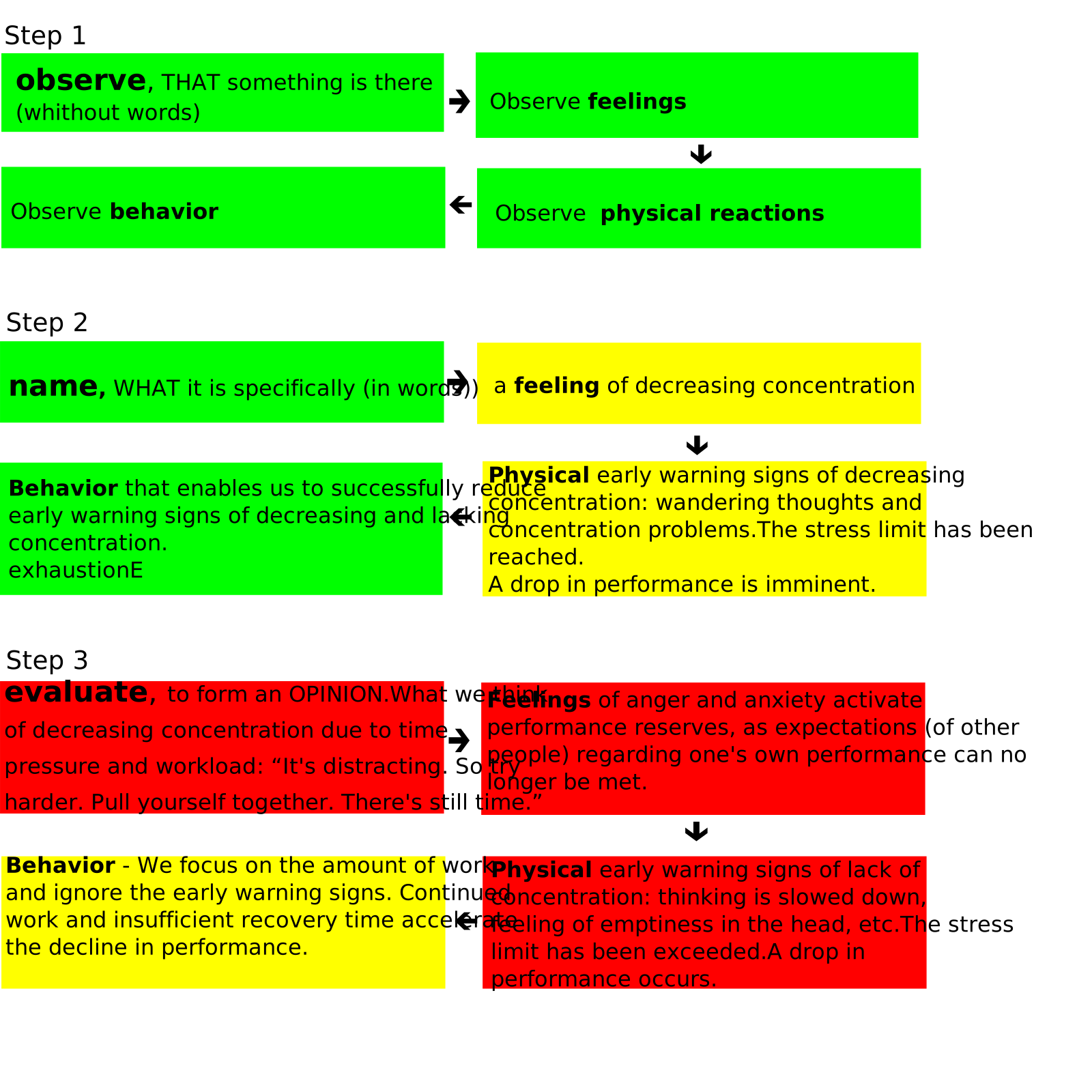
Our thinking takes place in 3 steps: observe, name and evaluate.
Step 1: observe
We notice THAT something is there. Observation takes place without words. We observe either the external environment or our inner experience and state of mind.
Step 2: name
We use words to name WHAT it is specifically that we have observed, what it is. For example, decreasing concentration.
Step 3: evaluate
When we evaluate, we process and deal with what can be observed and named. Evaluating means dealing with something, expounding it, interpreting it or forming an opinion about it. Evaluations generally take place in the sense of “good, bad, right or wrong”. We can evaluate decreasing concentration as disturbing.
Our thinking takes place in 3 steps: observe, name and evaluate.
The thought model for observing, naming and evaluating and the development of decreasing and lacking concentration. The model illustrates the expected psychological consequences of the negative evaluation of decreasing concentration.
© 2025 PIRKA® Wolfgang Smidt. The content provided on this website is protected by copyright. Any use requires the prior written consent of the author. The information and advice provided has been compiled to the best of our knowledge and carefully checked. However, it is no substitute for expert psychological and medical advice in individual cases.
You can also use
PIRKA® Early warning signs of decreasing concentration
PIRKA® Early warning signs of lack of concentration
PIRKA® Active reliefs that support our ability to concentrate
PIRKA® Noticing work disturbances
PIRKA® Understanding concentration problems and mental burnout
PIRKA® exhaustionE – Protocol 50-10 and 25-5
PIRKA® Hunger and ability to concentrate
Give it a try!
PIRKA wishes you every success in implementing it.
Literature
Becker-Carus, C. & Wendt, M. (2017). Aufmerksamkeit und Bewusstsein. In Becker-Carus, C. & Wendt, M. Allgemeine Psychologie. Berlin: Springer.
Gerrig, R., Dörfler, T. & Roos, J. (Hrsg.) (2018). Psychologie. München: Pearson.
Grawe, K. (1998). Psychologische Therapie. Göttingen: Hogrefe.
Grawe, K. (2004). Neuropsychotherapie. Göttingen: Hogrefe.
Herrmann, T. (2003). Planung und Regulation der Sprachproduktion. In Herrmann T. & Grabowski, J. (Hrsg.). Enzyklopädie der Psychologie. Sprachproduktion. Sprache 1 (S. 309-327). Göttingen: Hogrefe.
Kiefer, M. (2017). Bewusstsein. In Müsseler, J. & Rieger, M. (Hrsg.). Allgemeine Psychologie. Berlin: Springer.
Klix, F. (1976). Information und Verhalten. Kybernetische Aspekte der organismischen Informationsverarbeitung. Bern: Huber.
Lazarus, R.S. & Folkman, S. (1984). Stress, Appraisal and Coping. New York: Springer.
Lazarus, R.S. & Folkman, S. (1987). Transactional theory and research on emotions and coping. European Journal of Personality, Vol.1, 141-169
Pauen, M. (2006). Bewusstsein. In Funke, J. & Frensch, P.A. Handbuch der Allgemeinen Psychologie. Göttingen. Hogrefe.
Pechmann, T. (2003). Experimentelle Methoden. In Herrmann T. & Grabowski, J. (Hrsg.). Enzyklopädie der Psychologie. Sprachproduktion. Sprache 1 (S. 27-45). Göttingen: Hogrefe.
Schönwälder, T., Wille, K. & Hölscher, T. (2004). George Spencer-Brown. Eine Einführung in die „Laws of Form“. Wiesbaden: VS Verlag.
Schweizer, K. (2003). Das sprachliche Lokalisieren. In Herrmann T. & Grabowski, J. (Hrsg.). Enzyklopädie der Psychologie. Sprachproduktion. Sprache 1 (S. 623-652). Göttingen: Hogrefe.
Spencer-Brown, G. (1979). Laws of Form. New York: Dutton.
van der Meer, E. & Klix, F. (2003). Die begriffliche Basis der Sprachproduktion. In Herrmann T. & Grabowski, J. (Hrsg.). Enzyklopädie der Psychologie. Sprachproduktion. Sprache 1 (S. 333-355). Göttingen: Hogrefe.
Weiß, P. & Barattelli, S. (2003). Das Benennen von Objekten. In Herrmann T. & Grabowski, J. (Hrsg.). Enzyklopädie der Psychologie. Sprachproduktion. Sprache 1 (S. 587-615). Göttingen: Hogrefe.
Zimbardo, P.G. (1995). Psychologie. Heidelberg: Springer.
exhaustionE - Protocol 50-10 and 25-5
The following procedure is recommended
With the 50/10 and 25/5 exhaustionE protocol, PIRKA offers a scientifically based and tried-and-tested procedure that is suitable for documenting, assessing and supporting the ability to concentrate at work, at university or in the home office.
Application of the 50/10 and 25/5 exhaustionE protocol in 3 steps
The beginning
Select one of the two working time windows of □ 25 min. or □ 50 min. and tick it in the table. Set the TIMER. Start the work. If the selected time window □ 25 or □ 50 ends without an early warning sign □ do not tick any EWS. The work can be continued. To do this, select a new time window □ 25 or □ 50 in the next line.
Step 1 - Early warning signs EWS 1 □ 5 min.
If EWS 1 occurs in the selected time window □ 25 or □ 50 (attention wanders to non-task-related content), interrupt the work and tick □ FWZ 1. Then tick whether the recommended recovery time of □ 5 min. is initiated or not □ no.
- A recovery time of □ 5 min. is ticked and initiated. Set the TIMER to 5 min. At the end of the recovery time, select a new time window in the next line; □ 25 or □ 50 min.
- No recovery time is initiated and □ no is ticked. Select a new time window in the next line; □ 25 or □ 50 min.
Step 2 - Early warning signs EWS 2 □ 10 min.
If EWS 2 occurs in the selected time window □ 25 or □ 50 min (difficulty concentrating), interrupt the work and tick □ FWZ 2. Then tick whether the recommended recovery time of □ 10 min. is initiated or not □ no.
- A recovery time of □ 10 min. is ticked and initiated. Set the TIMER to 10 min. At the end of the recovery time, select a new time window in the next line; □ 25 or □ 50 min.
- No recovery time is initiated and □ no is ticked.
Step 3 – Beyond early warning signs of lack of concentration 10+(t ÷ 2)
If no recovery time □ no is ticked at EWS 2 and work continues beyond EWS 2 (difficulty concentrating), the subsequent working time (t) must be recorded with a TIMER and entered with t min in the formula
10+(t ÷ 2)
The recovery time required must be calculated individually beyond EWS 2, as the need for breaks beyond EWS 2 (difficulty concentrating) increases steadily over time!
exhaustionE - protocol for documenting, evaluating and supporting the ability to concentrate.
To prepare the exhaustionE protocol 50/10 and 25/5 use
PIRKA® Early warning signs of decreasing concentration
PIRKA® Early warning signs of lack of concentration
Use various relaxONnaming® techniques during breaks
PIRKA® relaxONnaming® colours
PIRKA® relaxONnaming® the surroundings
PIRKA® relaxONnaming® during the pause
exhaustionE - Protocol 50/10 and 25/5
Am I working concentrated? Date: ____________________
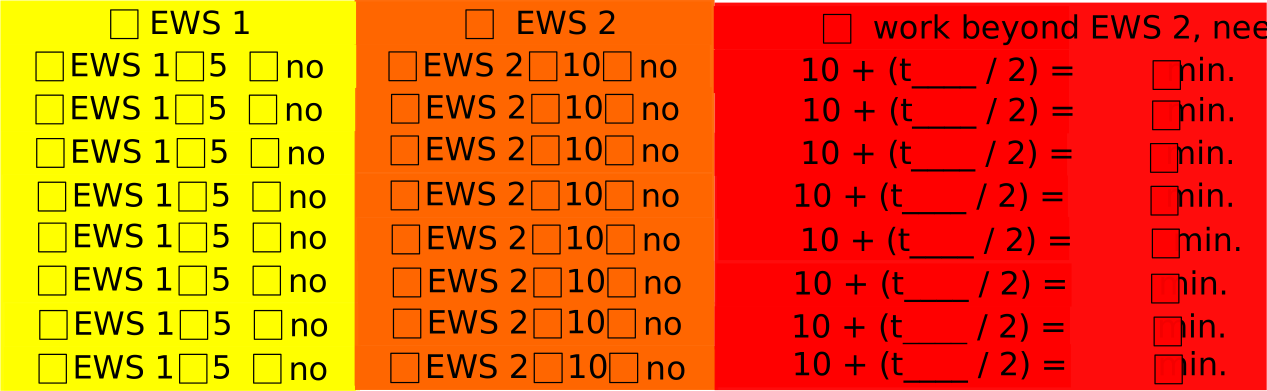
*(t) corresponds to the time from which work continues beyond EWS 2, i.e. despite difficulties in concentrating. Measure the time (t) with a TIMER and calculate 10+(t ÷ 2), as the need for breaks beyond EWS 2 increases steadily over time! Example: If work is continued for 100 minutes beyond EWS 2 despite existing concentration problems, the recovery time is calculated as follows: 10+(t ÷ 2) with 10+(100 ÷ 2) = 60 min. Such a long recovery time is not feasible in everyday working life! To avoid long recovery times, you should react promptly to EWS 1 and EWS 2.
Important note
Organic diseases with similar early warning signs must be ruled out by the doctor.
Early warning signs are not the result of the effects of medication, alcohol or drugs.
Useful tips
The topic of concentration has many facets. You might think that the ability to concentrate is like electricity from a socket and is always available. Or that if you lack concentration, all you have to do is work harder (like building muscle) and you can train your ability to concentrate. Clinical experience and research on mental fatigue and exhaustion prove that our full concentration can only be restored by taking breaks. The following conditions should be met:
- With early warning signs of decreasing concentration and early warning signs of lack of concentration, PIRKA offers concrete signs that can be observed and named by the individual.
- Specific break times should serve as a guide and match the progression of the various PIRKA early warning signs.
- How the break is spent is also crucial. Reading the news, making phone calls or having conversations are energy-demanding mental processes and, strictly speaking, are not breaks that allow the mind to rest. PIRKA offers a variety of relaxONnaming® breaks that can contribute to mental recovery in a timely manner.
- The use of a TIMER to measure the time windows of 50 and 25 minutes has proven itself in practice. Anyone using a conventional watch to measure time cannot distinguish whether looking at the watch is curiosity or early warning sign EWS 1 (attention wandering to non-task content).
Example - practical application of exhaustionE - Protocol 50/10 and 25/5
He set the TIMER to 50 minutes and started working on the task. It was a good feeling to be able to concentrate fully on the work and to be “woken up”. After 50 minutes, the TIMER reported back. He still felt mentally fit. He had not wandered off mentally and therefore ticked □ no in the log, i.e. no break. In the next line of the protocol, he ticked □ 50 min. again.
Remember: Distractions caused by ringing telephones, loud talking by others or street noise are distractions caused by external events and do not constitute digression into your own thoughts.
As he continued his work, he noticed the thought of who would pick up his daughter from kindergarten. There was a noticeable digression into another topic. He interrupted his work and decided to take a relaxONnaming® break. He set the TIMER to 5 minutes.
Some people believe that they do not need breaks or that the pressure of work does not allow it. Please remember that in a state of lack of concentration, which becomes noticeable through PIRKA early warning signs of lack of concentration, the number of careless mistakes increases. In addition, the need for breaks increases many times over! A lack of concentration is like a flat battery: the lower the battery in your cell phone, the longer it takes to charge. Or: The lower the battery in your flashlight, the less distance you can shine and the longer the charging time. Translated, this means that the less we can concentrate, the harder it is for us to master more difficult tasks and we comfort ourselves by completing a lot of easier tasks. The emptier the mental battery, the more time 10+(t ÷ 2) you need to regenerate until you are able to concentrate fully. And if we have not measured the working time from EWS 2, we do not know our personal “charging time”. As a result, we become more and more accustomed to the feeling of hard work due to a lack of concentration.
© 2025 PIRKA® Wolfgang Smidt. The content provided on this website is protected by copyright. Any use requires the prior written consent of the author. The information and advice provided has been compiled to the best of our knowledge and carefully checked. However, it is no substitute for expert psychological and medical advice in individual cases.
You can also use
PIRKA® Early warning signs of decreasing concentration
PIRKA® Early warning signs of lack of concentration
PIRKA® Active reliefs that support our ability to concentrate
PIRKA® Noticing work disturbances
PIRKA® Understanding concentration problems and mental burnout
PIRKA® exhaustionE – Protocol 50-10 and 25-5
PIRKA® Hunger and ability to concentrate
PIRKA® observe, name and evaluate burnout
Give it a try!
PIRKA wishes you every success in implementing it.
Literature
Abels, D. (1974). Konzentrations-Verlaufs-Test K-V-T. 2., verbesserte Auflage. Göttingen: Hogrefe.
Arnold, W., Eysenck, H. J. & Meili, R. (1987). Lexikon der Psychologie. Freiburg: Herder.
Borg, I. & Staufenbiel, T. (1989). Theorien und Methoden der Skalierung. Bern: Huber.
Brickenkamp, R., Schmidt-Atzert, L. & Liepmann, D. (2010). Test d2-Revision. Aufmerksamkeits- und Konzentrationstest. Göttingen: Hogrefe.
Clos, R. (2004). Ein Leitfaden zur Diagnose und Behandlung der ME/CFS für den Arzt in der Praxis. Hrsg.: South Australian Department of Human Services, PO Box 287 Rundle Mall 5000, South Australia, Australia.
Demerouti, E., Fergen, A., Glaser, J., Herbig, B., Hofmann, A., Nachreiner, F., Packebusch, L. & Seiler, K. (2012). Psychische Belastung und Beanspruchung am Arbeitsplatz. Inklusive DIN EN 10075-1 bis -3. Herausgeber: DIN Deutsches Institut für Normierung e.V. Berlin: Beuth.
Dilling, H., Mombour W. & Schmidt M.H. (2011). Internationale Klassifikation psychischer Störungen. Göttingen: Huber.
Düker, H. & Lienert, G. A. (2001). KLT-R Konzentrations-Leistungs-Test. Revidierte Fassung. Göttingen: Hogrefe.
Eimer, M., Nattkemper, D., Schröger, E & Prinz, W. (1996). Unwillkürliche Aufmerksamkeit. In O. Neumann & A. F. Sanders (Hrsg.), Enzyklopädie der Psychologie. Aufmerksamkeit. Kognition 2 (S. 219-258). Göttingen: Hogrefe.
EN ISO 10075.1 (2012). Ergonomische Grundlagen bezüglich psychischer Arbeitsbelastung. Allgemeines und Begriffe. In Demerouti, E. et. al. Psychische Belastung und Beanspruchung am Arbeitsplatz. DIN Deutsches Institut für Normung e.V. Berlin: Beuth.
EN ISO 10075.2 (2012). Ergonomische Grundlagen bezüglich psychischer Arbeitsbelastung. Gestaltungsgrundsätze. In Demerouti, E. et. al. Psychische Belastung und Beanspruchung am Arbeitsplatz. DIN Deutsches Institut für Normung e.V. Berlin: Beuth.
EN ISO 10075.3 (2012). Ergonomische Grundlagen bezüglich psychischer Arbeitsbelastung. Grundsätze und Anforderungen an Verfahren zur Messung und Erfassung psychischer Arbeitsbelastung. In Demerouti, E. et. al. Psychische Belastung und Beanspruchung am Arbeitsplatz. DIN Deutsches Institut für Normung e.V. Berlin: Beuth.
Franke, G.H. (2002). Symptom-Checkliste SCL-90-R von L.R. Derogatis. Göttingen: Beltz.
Frankenhaeuser, M. (1981). Coping with stress at work. International journal of health services, 491-510
Frankenhaeuser, M. (1986). A Psychobiological Framework for Research on Human Stress and Coping. In M.H. Appley & R. Trumbull (Hrsg.), Dynamics of Stress. New York: Plenum Stress.
Gaab, J. & Ehlert, U. (2005). Chronische Erschöpfung und Chronisches Erschöpfungssyndrom. Fortschritte der Psychotherapie. Göttingen: Hogrefe.
Heubrock, D. & Petermann, F. (2001). Aufmerksamkeitsdiagnostik. Psychologische Diagnostik. Band 2. Göttingen. Hogrefe.
Kallus, K. W. (2011). EBF Erholungs-Belastungs-Fragebogen. Frankfurt: Pearson.
Klix, F. (1976). Information und Verhalten. Kybernetische Aspekte der organismischen Informationsverarbeitung. Bern: Huber.
Klix, F. (1998). Begriffliches Wissen – episodisches Wissen. In Klix, F. & Spada, H. (Hrsg.), Enzyklopädie der Psychologie. Wissen. Kognition. (S. 167-205). Göttingen: Hogrefe.
Koelega, H.S. (1996). Vigilanz. In O. Neumann & A. F. Sanders (Hrsg.), Enzyklopädie der Psychologie. Aufmerksamkeit. Kognition 2 (S. 403-467). Göttingen: Hogrefe.
Luczak, H. (1989). Wesen menschlicher Leistung. Köln: Bachem.
Manzey, D. (1996). Psychophysiologie mentaler Beanspruchung. In O. Neumann & A. F. Sanders (Hrsg.), Enzyklopädie der Psychologie. Aufmerksamkeit. Kognition 2 (S. 799-850). Göttingen: Hogrefe.
Marschner, G. (1972). Revisions-Test. Ein allgemeiner Leistungstest zur Untersuchung anhaltender Konzentration bei geistiger Arbeit. Göttingen: Hogrefe.
Moosbrugger, H. & Oehlschlägel, J. (2019). FAIR-2. Frankfurter Aufmerksamkeits-Inventar 2. (2. überarb. u. erg. Aufl. des FAIR 1996). Göttingen: Hogrefe.
Oppolzer, A. (2006). Menschengerechte Gestaltung der Arbeit durch Erholzeiten. Abschlussbericht. Studie im Auftrag der Hans-Böckler-Stiftung.
Packebusch, L. (2012). Psychische Belastung und Beanspruchung – Erweiterungsmöglichkeiten des Normkonzepts ISO 10075. In E. Demerouti et. al. Psychische Belastung und Beanspruchung am Arbeitsplatz. Inklusive DIN EN 10075-1 bis -3. (S. 28-37). Herausgeber: DIN Deutsches Institut für Normierung e.V. Berlin: Beuth.
Rohmert, W. & Luczak, H. (1973). Zur ergonomischen Beurteilung informatorischer Arbeit. Internationale Zeitschrift für angewandte Physiologie, 31, 209-229
Rudow, B. (2011). Die gesunde Arbeit. Arbeitsgestaltung, Arbeitsorganisation und Personalführung. München. Oldenbourg.
Rühmann, H. & Bubb, H. (2010). Grundsätze ergonomischer Arbeitsplatz- und Betriebsmittelgestaltung. In U. Kleinbeck & K. H. Schmidt (Hrsg.), Enzyklopädie der Psychologie. Arbeitspsychologie. (S. 521-578). Göttingen: Hogrefe.
Schaarschmidt, U. & Fischer, A. W. (2013). Arbeitsbezogenes Verhaltens- und Erlebensmuster AVEM: Frankfurt: Pearson.
Schlick, C., Bruder, R. & Luczak, H. (2010). Arbeitswissenschaft. Heidelberg: Springer.
Schmidtke, H. (1965). Die Ermüdung. Bern: Huber.
Schmidtke, H. & Bubb, H. (1993). Das Belastungs-Beanspruchungs-Konzept. In Schmidtke, H. (Hrsg.), Lehrbuch der Ergonomie (3. Aufl.) München: Hanser.
Schmidtke, H. (Hrsg.) (1981) Lehrbuch der Ergonomie. München: Hanser.
Seiler, K. (2012). Merkmale und Folgen von Emotionsarbeit. In E. Demerouti et. al. Psychische Belastung und Beanspruchung am Arbeitsplatz. Inklusive DIN EN 10075-1 bis -3. (S. 28-37). Herausgeber: DIN Deutsches Institut für Normierung e.V. Berlin: Beuth.
Semmer, N. K., Grebner, S. & Elfering, A. (2010). Psychische Kosten von Arbeit: Beanspruchung und Erholung, Leistung und Gesundheit. In U. Kleinbeck & K. H. Schmidt (Hrsg.), Enzyklopädie der Psychologie. Arbeitspsychologie. (S. 325-358). Göttingen: Hogrefe.
van der Molen, M.W. (1996). Energetik und der Reaktionsprozess. Zwei Leitlinien der Experimentalpsychologie. In O. Neumann & A. F. Sanders (Hrsg.), Enzyklopädie der Psychologie. Aufmerksamkeit. Kognition 2 (S. 333-395). Göttingen: Hogrefe.
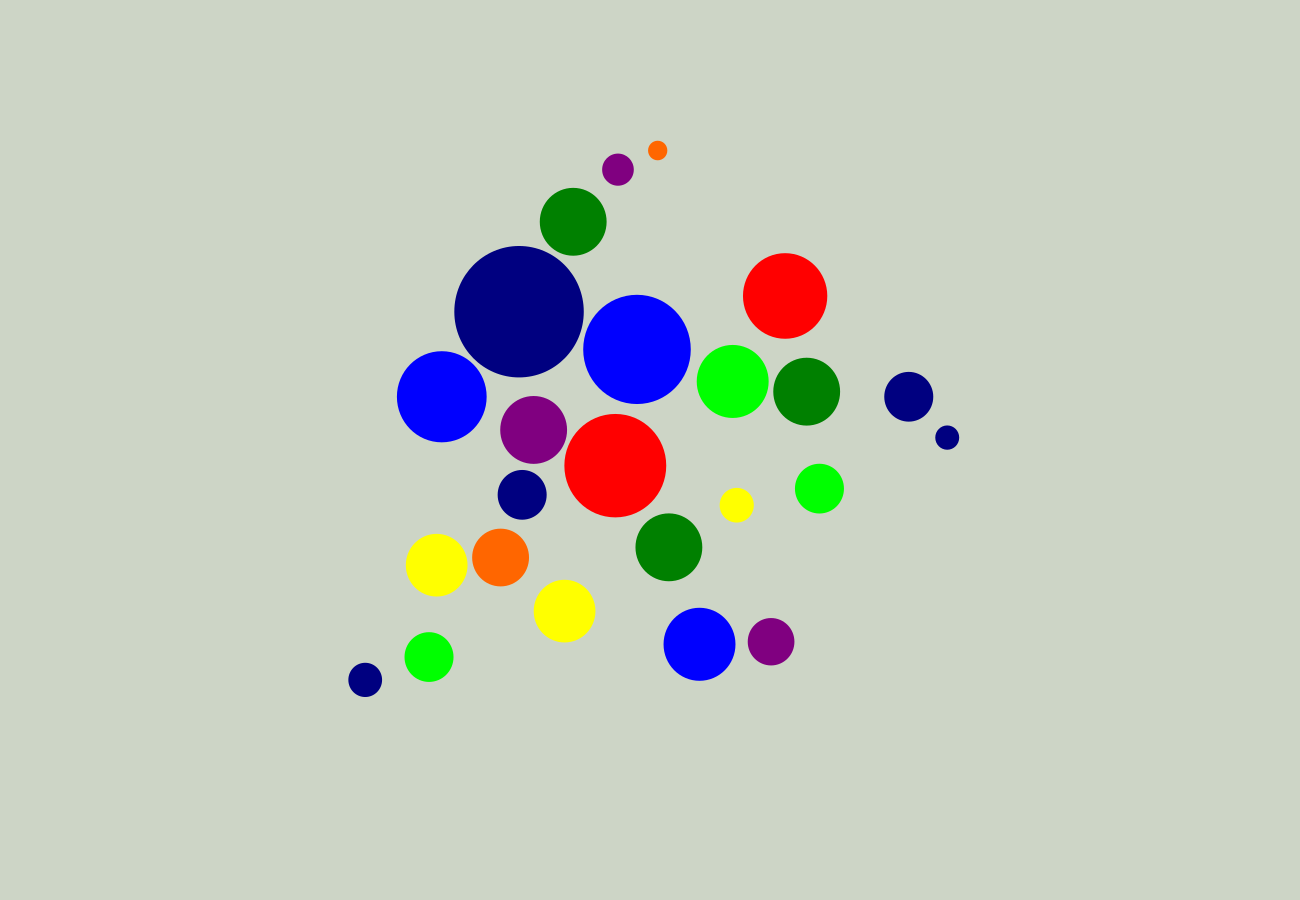
relaxONnaming® colors
The following procedure is recommended
- observe the surroundings,
- name a color that you see,
- only ever use one (!) word when naming,
- say the word silently in your mind,
- take a short break after each word,
- in which the gaze wanders calmly on and
- name another color.
- Continue the exercise until the mind has calmed down.
relaxONnaming colors can also be carried out independently of existing restlessness and promote calmness during the day.
It takes a little time for the thoughts you were previously preoccupied with to calm down and for the restlessness to subside.
Important note
Observing and naming colors is merely a matter of spatial orientation. Restlessness needs time to settle. A little patience is therefore necessary and helpful. If the restlessness persists, the exercise can be ended at any time by concentrating on another task or activity.
Practicing twice a day for 2 minutes may be enough.
Advantages of relaxONnaming®
- relaxONnaming is easy to learn,
- the exercise can be carried out unnoticed by third parties,
- relaxONnaming can be used in different places and at any time.
Important note
Do not use relaxONnaming colors when driving a vehicle or operating machinery, as it can cause you to fall asleep when you are already tired.
relaxONnaming colors can help to reduce mild and moderate inner restlessness.
Example 1 - Naming colors
On his way to the train station in the morning, he noticed the variety of colors around him. Words for colors come to mind most quickly. When naming colors, however, you have to be careful not to get hectic and name them too quickly, because colors are everywhere.
His eyes first fell on a tree. Its color was green. In his mind he said the word: “Green”. He walked on. His gaze wandered calmly over the surroundings. He saw a brown leaf. In his mind he said the word: “Brown”. Short pause, in which the gaze continues to wander calmly. Then he saw a white car. In his mind he said the word: “White”. Short pause, in which the gaze continues to wander calmly. Then he noticed a yellow flower by the side of the road. He said the word “yellow” in his mind.
It is important to move slowly from one color to the next, without haste.
Practical application
While observing, he named the color and said the respective word in his mind: Green … short pause, in which the gaze continues to wander calmly … brown … short pause, in which the gaze continues to wander calmly … white … short pause, in which the gaze continues to wander calmly … yellow … short pause … He continued the exercise until mental calmness was noticeable.
Example 2 - Injustice
He entered the store and noticed that he was the only customer. The sales clerk had noticed his arrival but continued with her task. Just as he was about to approach the sales clerk, another customer entered the store. The sales clerk approached him, greeted him and asked if she could help him. He felt this was unfair and felt anger welling up inside him. He wondered why the order could not be followed. To stop himself getting upset and pass the time, he began to observe and name the different colors in the store.
Words for colors come to mind the quickest. When naming colors, however, you have to be careful not to rush and name them too quickly, because colors are everywhere. It is therefore advisable to move slowly from one color to the next, without rushing.
His eyes first fell on the wall. It was painted a bright green. He said the word “green” in his mind. He looked around the room. His gaze fell on a white table. In his mind, he said the word: “White”. Short pause, in which the gaze continues to wander calmly. He saw a shelf made of brown wood. In his mind, he said the word: “Brown”. Short pause, in which the gaze continues to wander calmly. Then he looked at the gray carpet. In his mind he said the word: “Gray”. There was a white receipt. In his mind he said the word: “White”. Then he noticed a picture of a yellow flower. In his mind he said the word: “Yellow”.
Practical application
While observing, he named the color and said the respective word in his mind: Green … short pause, in which the gaze continues to wander calmly … white … short pause, in which the gaze continues to wander calmly … brown … short pause, in which the gaze continues to wander calmly … gray … short pause … white … short pause … yellow … He continued the exercise until mental calmness was noticeable.
Example 3 - Insults
As a supervisor, he knew that not every employee would like him. When he met a group of employees on the factory premises, he greeted them in a friendly manner. No one returned his greeting. Instead, some scowled at him. As he turned the corner, he heard one of the employees say: “You can’t take him seriously!” Yet he had only recently pleaded with the management for a pay rise. Anger rose in him and slowly intensified. To calm himself down, he began to observe and name colors as he made his way across the factory premises.
His gaze wandered across the factory premises. There was a green forklift truck 10 meters away. He said the word “green” in his mind. Short pause, in which the gaze continues to wander calmly. Another employee crossed his path and briefly said hello. He was in a hurry and was carrying a red folder. He said the word “red” in his mind. Short pause, in which the gaze continues to wander calmly. His eyes fell on a tree with white flowers. In his mind, he said the word: “White”. Short pause, in which the gaze continues to wander calmly. The tree stood in a parking lot with grey asphalt. He said the word “grey” in his mind. Short pause, in which the gaze continues to wander calmly. The building to the left was painted black. In his mind he said the word: “Black”. He walked towards the entrance to the main building. The front door was painted red. In his mind he said the word: “Red”. A yellow vehicle was parked in front of the entrance. In his mind he said the word: “Yellow”.
Practical application
While observing, he named the color and said the respective word in his mind: Green … short pause, in which the gaze continues to wander calmly … red … short pause, in which the gaze continues to wander calmly … white … short pause, in which the gaze continues to wander calmly … grey … short pause … black … short pause … red … short pause … yellow … He continued the exercise until a mental calmness was noticeable.
Example 4 – Annoyance
English class had started and the teacher placed the class tests on the desk in front of her. She absolutely needed a good grade in order to maintain her overall grade of B in her final report. After the exercise books had been handed out, she hastily opened the last page and was shocked: Grade D. That couldn’t be true. The teacher must have made a mistake. She had learned a lot for this assignment. A later discussion with the teacher didn’t help. He listened patiently to her arguments, but pointed out the lack of important content and stuck with the grade. To find some peace, she started observing and naming colors in the schoolyard.
The first thing that caught her eye was a classmate’s cap. The color was pink. She said the word “pink” in her mind. She looked around the schoolyard. Her gaze fell on a pupil wearing a blue winter jacket. She said the word “blue” in her mind. Short pause, in which the gaze continues to wander calmly. There was a tall gray ashtray in the smoker’s corner. She said the word “gray” in her mind. Short pause, in which the gaze continues to wander calmly. A white mask lay on the floor in front of her. In her mind she said the word: “White”. Next to it lay a lost yellow glove. In her mind she said the word: “Yellow”. Short pause, in which the gaze continues to wander calmly. She saw a teacher supervising recess. She was wearing a long brown coat. In her mind she said the word: “Brown”.
Practical application
While observing, she named the color and said the respective word in her mind: Pink … short pause, in which the gaze continues to wander calmly … blue … short pause, in which the gaze continues to wander calmly … gray … short pause … white … short pause … yellow … short pause … brown … She continued the exercise until a mental calm was noticeable.
© 2025 PIRKA® Wolfgang Smidt. The content provided on this website is protected by copyright. Any use requires the prior written consent of the author. The information and advice provided has been compiled to the best of our knowledge and carefully checked. However, it is no substitute for expert psychological and medical advice in individual cases.
Give it a try!
PIRKA wishes you every success in implementing it.
Literature
Baltissen, R. & Sartory, G. (1998). Orientierungs-, Defensiv- und Schreckreaktionen: Grundlagenforschung und Anwendung. In Rösler, F. (Hrsg.). Ergebnisse und Anwendungen der Psychophysiologie. Enzyklopädie der Psychologie. Biologische Psychologie. (S. 1-35)
Bateson, G. (1981). Ökologie des Geistes. Frankfurt. Suhrkamp.
Bösel, R. (2009). Neuropsychologie. In Brandstätter, V. & Otto, J. H. (Hrsg.). Handbuch der Allgemeinen Psychologie. Motivation und Emotion. Göttingen: Hogrefe.
Dörner, D. (1998). Emotionen, kognitive Prozesse und der Gebrauch von Wissen. In Klix, F. & Spada, H. (Hrsg.), Enzyklopädie der Psychologie. Wissen. Kognition. (S. 301-330). Göttingen: Hogrefe.
Eimer, M., Nattkemper, D., Schröger, E & Prinz, W. (1996). Unwillkürliche Aufmerksamkeit. In O. Neumann & A. F. Sanders (Hrsg.), Enzyklopädie der Psychologie. Aufmerksamkeit. Kognition 2 (S. 219-258). Göttingen: Hogrefe.
Gamer, M. (2019). Aufmerksamkeit. In Pinel, J. P. J., Barnes, S. J. & Pauli, P. (Hrsg.). Biopsychologie. München: Pearson.
Grawe, K. (2004). Neuropsychotherapie. Göttingen: Hogrefe.
Haynes, J.-D. (2013). Bewusstsein und Aufmerksamkeit. In Schröger, E. & Koelsch, S. (Hrsg.). Affektive und Kognitive Neurowissenschaft. Enzyklopädie der Psychologie. Kognition 5 (S. 47-78). Göttingen: Hogrefe.
Herrmann, T. (2003). Planung und Regulation der Sprachproduktion. In Herrmann T. & Grabowski, J. (Hrsg.), Enzyklopädie der Psychologie. Sprachproduktion. Sprache 1 (S. 309-327). Göttingen: Hogrefe.
Hoffmann, J. (1994). Die visuelle Identifikation von Objekten. In Prinz, W. & Bridgeman, B. (Hrsg.), Enzyklopädie der Psychologie. Wahrnehmung. (S. 391-444). Göttingen: Hogrefe.
Kintsch, W. (1982). Gedächtnis und Kognition. Heidelberg: Springer.
Klix, F. (1976). Information und Verhalten. Kybernetische Aspekte der organismischen Informationsverarbeitung. Bern: Huber.
Klix, F. (1976). Über Grundstrukturen und Funktionsprinzipien kognitiver Prozesse. In F. Klix (Hrsg.). Psychologische Beiträge zur Analyse kognitiver Prozesse. Kindler: München.
Klix, F. (1998). Begriffliches Wissen – episodisches Wissen. In Klix, F. & Spada, H. (Hrsg.), Enzyklopädie der Psychologie. Wissen. Kognition 6 (S. 167-205). Göttingen: Hogrefe.
Koelega, H.S. (1996). Vigilanz. In O. Neumann & A. F. Sanders (Hrsg.), Enzyklopädie der Psychologie. Aufmerksamkeit. Kognition 2 (S. 403-467). Göttingen: Hogrefe.
Lau, F. (2012). Die Form der Paradoxie. Eine Einführung in die Mathematik und Philosophie der Laws of Form von George Spencer Brown. Heidelberg: Carl-Auer.
Luhmann, N. (1998). Die Wissenschaft der Gesellschaft. Frankfurt: Suhrkamp.
Luhmann, N. (2004). Einführung in die Systemtheorie. Heidelberg: Carl Auer.
Manzey, D. (1998). Psychophysiologie mentaler Beanspruchung. In F. Rösler (Hrsg.), Enzyklopädie der Psychologie. Ergebnisse und Anwendungen der Psychophysiologie. Biologische Psychologie. (S. 799-850). Göttingen: Hogrefe.
Mecklinger, A. (2013). Neurokognition des Erinnerns. In Schröger, E. & Koelsch, S. (Hrsg.). Affektive und Kognitive Neurowissenschaft. Enzyklopädie der Psychologie. Kognition 5 (S. 155-180). Göttingen: Hogrefe.
Moosbrugger, H. & Oehlschlägel, J. (2019). FAIR-2. Frankfurter Aufmerksamkeits-Inventar 2. (2., überarb. u. erg. Auflage des FAIR 1996). Göttingen: Hogrefe.
Müller, H. & Krummenacher, J. (2012). Funktionen und Modelle der selektiven Aufmerksamkeit. In Karnath, H-O. & Thier, P. (Hrsg.). Kognitive Neurowissenschaften. Berlin: Springer.
Norman, D. & Bobrow, G. (1975). On Data-limited and Ressource-limited Processes. Cognitive Psychology, 7, 44-64
Olst, E. H. ((1971). The Orienting Reflex. Mouton. De Gruyter.
Pechmann, T. (2003). Experimentelle Methoden. In Herrmann T. & Grabowski, J. (Hrsg.), Enzyklopädie der Psychologie. Sprachproduktion. Sprache 1 (S. 27-45). Göttingen: Hogrefe.
Schönwälder, T., Wille, K. & Hölscher, T. (2004). George Spencer-Brown. Eine Einführung in die „Laws of Form“. Wiesbaden: VS Verlag.
Schröger, E. & Koelsch, S. (2013). Bemerkungen zu einer Affektiven und Kognitiven Neurowissenschaft. In Schröger, E. & Koelsch, S. (Hrsg.). Affektive und Kognitive Neurowissenschaft. Enzyklopädie der Psychologie. Kognition 5 (S. 1-9). Göttingen: Hogrefe.
Schweizer, K. (2003). Das sprachliche Lokalisieren. In Herrmann T. & Grabowski, J. (Hrsg.), Enzyklopädie der Psychologie. Sprachproduktion. Sprache 1 (S. 623-652). Göttingen: Hogrefe.
Semmer, N. K., Grebner, S. & Elfering, A. (2010). Psychische Kosten von Arbeit: Beanspruchung und Erholung, Leistung und Gesundheit. In U. Kleinbeck & K. H. Schmidt (Hrsg.), Enzyklopädie der Psychologie. Arbeitspsychologie. (S. 325-358). Göttingen: Hogrefe.
Sokolov, E. N., Spinks, J. A., Näätänen, R. & Lyytinen, H. (2002). The Orienting Response in Information Processing. London: Lawrence Erlbaum Associates.
Sokolov, E. N. (2013). The Psychophysiology of Conciousness. New York: Oxford University Press.
Spencer-Brown, G. (1979). Laws of Form. New York: Dutton.
Sturm, W. (2008). Aufmerksamkeitsstörungen. In Gauggel, S. & Herrmann, M. (Hrsg.). Handbuch der Neuro- und Biopsychologie. Göttingen: Hogrefe.
van der Heijden, H. C. (1996). Visuelle Aufmerksamkeit. In. Neumann, O. & Sanders, A. F. (Hrsg.). Aufmerksamkeit. Enzyklopädie der Psychologie. Aufmerksamkeit. Kognition 2. (S. 7-50). Göttingen: Hogrefe.
van der Meer, E. & Klix, F. (2003). Die begriffliche Basis der Sprachproduktion. In Herrmann T. & Grabowski, J. (Hrsg.), Enzyklopädie der Psychologie. Sprachproduktion. Sprache 1 (S. 333-355). Göttingen: Hogrefe.
van der Molen, M.W. (1996). Energetik und der Reaktionsprozess. Zwei Leitlinien der Experimentalpsychologie. In O. Neumann & A. F. Sanders (Hrsg.), Enzyklopädie der Psychologie. Aufmerksamkeit. Kognition 2 (S. 333-395). Göttingen: Hogrefe.
von Weizsäcker, E. U. (1986). Erstmaligkeit und Bestätigung als Komponenten der pragmatischen Information. In von Weizsäcker, E. U. (Hrsg.). Offene Systeme I. Beiträge zur Zeitstruktur von Information, Entropie und Evolution. Stuttgart: Klett-Cotta.
Weiß, P. & Barattelli, S. (2003). Das Benennen von Objekten. In Herrmann T. & Grabowski, J. (Hrsg.), Enzyklopädie der Psychologie. Sprachproduktion. Sprache 1 (S. 587-615). Göttingen: Hogrefe.