


simply listen
The following procedure is recommended
- look at the other person,
- listen until the person has finished talking,
- show your attention by nodding your head, saying “yes” or “hm”,
- summarizing what you have heard helps to prevent premature counter-reactions,
- asking questions when things are unclear helps to understand the other person correctly.
Simply listening to other people helps to show consideration and appreciation for their concerns.
Example - The watering can principle
When we water plants, we go from one plant to the next until the pot is empty. When we tell another person something, we want to talk until everything important has been said. As a listener, it is then helpful to imagine the speaker as a watering can and to listen until the “can is empty”.
Ms. B. seemed upset and complained bitterly about her colleague’s behavior. The supervisor looked at Ms. B. calmly. He could have objected right at the beginning of the conversation, but he slowed down.
Then he imagined Ms. B. as a watering can emptying her water. Ms. B. spoke quickly and indulged in reproaches. So the watering can was well filled. How could he help Ms. B. to “empty the watering can” and not interfere prematurely?
By saying “hm” and nodding his head, he signaled to her that he was listening attentively and going along with her. Ms. B. continued talking. The jug emptied.
By saying “yes” and “aha”, he encouraged Ms. B. to continue speaking. The jug continued to empty.
Then Ms. B came to a standstill. She thought about it and seemed somewhat blocked. By repeating the last sentence, he helped her to pick up the thread again. The jug continued to empty until only a trickle could be seen. There was a pause, which lasted despite further encouragement to continue. Ms. B. looked at him. The jug was empty.
He summarized the essentials to show that he had listened and slowed down in his efforts to answer quickly.
He had noted one ambiguity and clarified it after “emptying the jug”.
Ms. B felt that her concerns were respected and understood. The rest of the conversation could now proceed calmly and with mutual respect.
© 2025 PIRKA® Wolfgang Smidt. The content provided on this website is protected by copyright. Any use requires the prior written consent of the author. The information and advice provided has been compiled to the best of our knowledge and carefully checked. However, it is no substitute for expert psychological and medical advice in individual cases.
Give it a try!
PIRKA wishes you every success in implementing it.
Literature
Hoyer, J. & Wittchen, H. U. (2011). Gesprächsführung in der Klinischen Psychologie und Psychotherapie. In Wittchen, H. U. & Hoyer, J. (Hrsg.). Klinische Psychologie und Psychotherapie. Berlin: Springer Verlag.
Speierer, G. W. (2011). Unkonditionales Akzeptieren. In Linden, M. & Hautzinger, M. (Hrsg.). Verhaltenstherapiemanual. Berlin: Springer Verlag.


Consider positive and negative consequences
The following procedure is recommended
Before a new idea replaces a previously used approach, ask yourself
- what consequences the previous approach has in comparison to the new idea.
Looking at positive and negative consequences helps to compare previous approaches with new ideas.
Example 1 - Maintain sales strategy
As a baker, he was proud to produce his baked goods by hand in the traditional way. During production, however, there was the problem of differences in the size of the products, which were also visible to the customer in the display. The price was the same. It had always worked to select and sell the largest piece from the range for the customer. The next customer would also receive the next largest piece and so on. This process took more time than just selling. A good friend said to him: “I have a new idea! You can speed up the sale by selling the goods that are closest to you. That way you can serve more customers even faster. The baker was faced with the choice of replacing an approach that worked with a new idea. He decided to think through the consequences of his previous approach. What are the customer requirements? And how do the observable and nameable consequences of the usual procedure relate to the customer’s wishes?
Practical application - previous procedure
He noted on a piece of paper only those consequences that could be observed and named :
Short-term positive consequence; observable and nameable: The customer can observe that the baker always sells him the largest baked goods in the customer’s interest.
Long-term positive consequence; observable and nameable: The customer trusts that they will always receive the largest piece the next time they shop.
Short-term negative consequence; observable and nameable: The sale takes a little longer.
Long-term negative consequence; observable and nameable: The next customer has to wait a little longer to be served.
Practical application - new idea
Short-term positive consequence; observable and nameable: He was able to serve customers faster.
Long-term positive consequence; observable and nameable: There were no long waiting times.
Short-term negative consequence; observable and nameable: There were customers who noticed that they were sold the small baked goods.
Long-term negative consequence; observable and nameable: Customers switched to the competition out of anger.
Conclusion: The baker retained the previous well-functioning procedure and was sure that he was acting in the customer’s interest.
Example 2 - Writing a shopping list
Mrs. M. never really had time. Everything had to be done quickly, including the shopping. It had always worked for her to wander through the markets and buy what she needed. Due to her limited time, this approach had proved successful and she stubbornly stuck to it. In the end, however, something was always missing or another item was then duplicated in the household. And when Mrs. M. was hungry, a few more products were added to the shopping basket. Her friend suggested the idea of taking a few minutes before shopping and writing a shopping list. Should Mrs. M. give up the approach that worked and implement the new idea?
Practical application - previous procedure
She wrote down on a piece of paper only those consequences that were observable and nameable:
Short-term positive consequence; observable and nameable: She was able to go shopping quickly.
Long-term positive consequence; observable and nameable: She had more time for important things.
Short-term negative consequence; observable and nameable: Sometimes she forgot items and had to go shopping again.
Long-term negative consequence; observable and nameable: She bought twice or too many items.
Practical application - new idea
Short-term positive consequence; observable and nameable: She only bought what was missing.
Long-term positive consequence; observable and nameable: She saved money and never had too much in the household.
Short-term negative consequence; observable and nameable: It took time to get an overview in the kitchen.
Long-term negative consequence; observable and identifiable: If she took 5 minutes every week to do the shopping list, that would be 260 minutes a year for 52 weeks. More than 4 hours a year! She took a deep breath.
Conclusion: Mrs. M. decided to save money and try the new idea because of the positive consequences.
© 2025 PIRKA® Wolfgang Smidt. The content provided on this website is protected by copyright. Any use requires the prior written consent of the author. The information and advice provided has been compiled to the best of our knowledge and carefully checked. However, it is no substitute for expert psychological and medical advice in individual cases.
You can also use
Give it a try!
PIRKA wishes you every success in implementing it.
Literature
Bösel, R. M. (2001). Denken. Ein Lehrbuch. Göttingen: Hogrefe.
Gerrig, R. J., Dörfler, T. & Roos, J. (Hrsg.) (2018) Psychologie. München: Pearson.
Grawe, K., Donati, R. & Bernauer, F. (2001). Psychotherapie im Wandel. Göttingen: Hogrefe.
Houston, J. P. (1981). Fundamentals of Learning and Memory. New York: Academic Press.
Kaiser, A. & Hahlweg, K. (2000). Kommunikations- und Problemlösetraining. In Margraf, J. (Hrsg.). Lehrbuch der Verhaltenstherapie. Heidelberg: Springer.
Maerker, A. (2000). Operante Verfahren. In Margraf, J. (Hrsg.). Lehrbuch der Verhaltenstherapie. Berlin: Springer.
Öllinger, M. (2017). Denken und Problemlösen. In Müsseler, J. & Rieger, M. (Hrsg.). Allgemeine Psychologie. Berlin: Springer.
Zimbardo, P. G., Johnson, R. L. & McCann, V. (2016). Schlüsselkonzepte der Psychologie. München: Pearson.
This is a custom heading element.

relaxONnaming® to help with small talk
The following procedure is recommended
- quietly observe what is happening in the immediate vicinity or
- observe things, objects or people and
- talk about it with the other person.
Please remember to accept the other person’s lack of interest in small talk as their right and not to take it personally! You can tell after the second attempt whether there is interest or not. You also have the right to reject another person’s attempt at contact. In this case, end your unwanted invitation to small talk with a friendly greeting: “Have a nice day” or “All the best” or “Goodbye”.
Relax on observing and naming your surroundings to facilitate small talk by finding topics to get to know someone, break the silence or keep a conversation going.
Example 1 - In the café
He was interested in the person and was looking for a topic to get to know each other. He took his time to look around the café. He only concentrated on the things that the other person could also observe and about which the person could form an opinion.
Practical application
He noticed that there were many guests sitting at the tables and started the conversation by saying: “There are a lot of guests in the café today.”
He observed that only one service employee was working and said: “But with only one person in service, it’s not easy to serve all the guests”.
He observed and noticed that the coffee in front of him was very hot: “I appreciate it when the coffee is served hot. That’s always the case in this café”.
Example 2 - On the platform
She was interested in the person and was looking for a topic to get to know each other. She took her time to look around the platform. She concentrated on things that the other person could also observe or form an opinion about.
Practical application
She observed that the trains were arriving and departing on time and said to the other person: “The trains are very punctual today.”
She observed that only a few passengers were waiting for the train and said: “But there are only a few passengers on the train at this time of day.”
She noticed that there was no garbage lying around on the platform: “I think it’s great when the platforms are kept so clean. It’s certainly not always easy.”
Example 3 - Telephone call with a friend
She wanted to avoid the silence that had set in on the phone and lighten the atmosphere. To do this, she looked around her room and named the things she could observe.
Practical application
She had made herself comfortable and was sitting on the sofa in her jogging suit. She had made herself a cup of hot chocolate before the phone call. The weather was bad with rain and gray clouds. She would have had enough work. There were still some bills to pay and she urgently needed to read a book for work. Instead, she wanted to distract herself and call her friend. But her friend didn’t have much to say today and sounded a little irritable. There was a silence and she tried to lighten the atmosphere a little.
She talked about what she could observe and name: ‘I’m sitting here on the sofa in my jogging suit right now, listening to classical music. There’s a warm cup of cocoa next to me and when I look out of the window, all I can see is rain and gray clouds. I actually have time to tidy my desk now. There’s a book next to a pile of bills that I really need to read. I’m just too lazy today. What are you doing right now?”
Example 4 - In the nightclub
She was interested in the person at the next table and was looking for a topic to get to know each other. She took her time to look around the disco. She concentrated on things that the other person could also observe and about which the person could form an opinion.
Practical application
She observed that there were many guests in the nightclub and said to the person: “But it’s full again today.”
She observed that there were only a few guests and said: “I wonder if there’s another event today? There are so few guests.”
She observed that there were a lot of oldies being played that evening and said, “But there are a lot of oldies being played today. I like oldies. And you?”
© 2025 PIRKA® Wolfgang Smidt. The content provided on this website is protected by copyright. Any use requires the prior written consent of the author. The information and advice provided has been compiled to the best of our knowledge and carefully checked. However, it is no substitute for expert psychological and medical advice in individual cases.
Give it a try!
PIRKA wishes you every success in implementing it.
Improve falling asleep and staying asleep
The general rule is
Only going to bed when you feel tired (called sleep pressure) improves falling asleep and sleeping through the night.
The following procedure is recommended
- only go to bed when you feel tired (called sleep pressure),
- no activities in bed that promote wakefulness in order to get tired (cell phone, reading, TV or laptop),
- if you cannot fall asleep after about 20 minutes, get out of bed,
- pursue a pleasant activity in another room (reading, music, TV),
- only go back to bed when you feel tired (sleep pressure),
- if you are unable to fall asleep again after about 20 minutes, get out of bed again,
- only go back to bed when you feel tired (sleep pressure) and so on,
- do not look at the alarm clock during the night so as not to build up pressure of expectation,
- get up at the same time every morning regardless of how long you have slept (set an alarm clock),
- to increase the pressure to sleep in the evening, it makes sense not to sleep during the day. Not even if you feel tired.
Observing simple sleep rules helps to improve falling asleep and staying asleep.
Important note
Sleep disorders should not be the result of the consumption of caffeine, nicotine, alcohol, psychoactive substances or organic sleep disorders.
Please note
Using the method can initially lead to considerable daytime tiredness. This can have a negative effect on your ability to concentrate during the day.
Example 1 - waking up at night
He had been able to fall asleep quickly, but after two hours the night was over for him. Thoughts of work and family problems came to mind. He noticed that he began to think about these problems, which led to inner restlessness and increasing alertness.
Practical application
He got up and went into the next room, where he watched an interesting movie. He deliberately sat down on a chair and not on the sofa. He would feel the tiredness (sleep pressure) better on the hard chair. After a while, he could have fallen asleep on the chair and moved back into the bedroom. As soon as he lay down, his thoughts returned. After about 20 minutes, he moved to the other room again and finished watching the movie. The tiredness was clearly noticeable again. He went to bed and fell asleep immediately this time. When the alarm clock rang, he hadn’t slept much and wasn’t fully rested. He comforted himself with the thought that even after a bad night’s sleep, he could still achieve a lot. He decided to forgo his midday nap so that he would be sufficiently tired in the evening.
Example 2 - Laptop in bed
She had gotten into the habit of working on her laptop while lying in bed in order to get tired. What didn’t occur to her was the psychological fact that concentrated work on the laptop associated wakefulness with a place (bed) that should actually be associated with tiredness and sleep.
Practical application
Without further ado, she took the laptop into the study and completed tasks until she felt clearly tired. She then went back to bed and, in terms of learning psychology, connected the tiredness with the place (bed) where the tiredness belonged. She spent two nights repeatedly lying down and getting up. But it was worth it to her. She was confident that she would soon be able to fall asleep and sleep through the night better.
© 2025 PIRKA® Wolfgang Smidt. The content provided on this website is protected by copyright. Any use requires the prior written consent of the author. The information and advice provided has been compiled to the best of our knowledge and carefully checked. However, it is no substitute for expert psychological and medical advice in individual cases.
Give it a try!
PIRKA wishes you every success in implementing it.
Literature
Backhaus, J. & Riemann, D. (1999). Schlafstörungen. Fortschritte der Psychotherapie. Göttingen: Hogrefe
Crönlein, T. (2013). Primäre Insomnie. Ein Gruppentherapieprogramm für den stationären Bereich. Göttingen: Hogrefe.
Gerrig, R.J., Dörfler, T. & Roos, J. (Hrsg.) (2018). Psychologie. München: Pearson
Hertenstein, E., Nissen, C. & Riemann, D. (2017). Insomnie. In Brakemeier, E.-L. & Jacobi, F. (Hrsg.). Verhaltenstherapie in der Praxis (S. 586-594). Weinheim: Beltz
Riemann, D. (2004). Ratgeber Schlafstörungen. Göttingen: Hogrefe
Riemann, D. (2011). Schlafstörungen. In Linden, M. & Hautzinger, M. (Hrsg.). Verhaltenstherapiemanual ((S. 631-634). Heidelberg: Springer
Scharfenstein, A. & Basler, H.-D. (2004). Schlafstörungen. Göttingen: Vandenhoeck & Ruprecht
Early warning signs of decreasing concentration
The following procedure is recommended
Early warning signs of decreasing concentration are everyday signs of fatigue as a result of mental tension. With a little practice, the early warning signs can be observed and named in everyday life.
Early warning sign EWS No. 1 and early warning sign EWS No. 2 of decreasing concentration are noticeable first. Early warning signs of lack of concentration follow.
PIRKA Early warning signs EWS of decreasing concentration
EWS No. 1 – Attention wanders off into non-task content
Mental digression must be distinguished from external distractions. External distractions are triggered by events in our environment that are new to us or occur surprisingly and unexpectedly. For example, a colleague we weren’t expecting enters the office and interrupts our previous thoughts about work. Or the phone rings and interrupts the last thought by drawing our attention to the ringing. Digression is different. We mentally digress from one thought to a completely different topic. While reading a text, we digress into thoughts about a cup of coffee or opening the window because the air is so bad. Or we suddenly remember that we need to buy something to eat.
EWS No. 2 – Concentration difficulties
The repeated digression into other topics is noticed, but we always return to our task. The result is that we digress more and more often due to progressive mental fatigue. Repeated digression corresponds to the difficulty of staying on topic, i.e. the difficulty of concentrating.
Important note
Organic diseases with similar early warning signs must be ruled out by the doctor.
Early warning signs are not the result of the effects of medication, alcohol or drugs.
If you react to EWZ 1 and EWS 2 in good time, you will save yourself EWSs due to lack of concentration!
Please note the exhaustionE to restore the ability to concentrate.
After the early warning signs appear, you should take a break, the duration of which is based on the individual early warning signs EWS 1 and EWS 2. Anyone who continues to work beyond EWS 2 despite having difficulty concentrating must make more and more effort to remain focused and therefore concentrated. This mental effort results in
- that our thinking is increasingly slowing down. This can be seen in the early warning signs of a lack of concentration.
- that the break requirement increases continuously beyond EWS 2. For this reason, the time (t) beyond EWS 2 must be measured with a TIMER and the break requirement calculated individually with 10+(t ÷ 2).
PIRKA suggests relaxONnaming® during the pause, relaxONnaming® the surroundings and relaxONnaming® colours as a time-out.
exhaustionE

*(t) corresponds to the time from which work continues beyond EWS 2, i.e. despite difficulties in concentrating. Measure the time (t) with a TIMER and calculate 10+(t ÷ 2), as the need for breaks beyond EWS 2 increases steadily over time! Example: If work is continued for 100 minutes beyond EWS 2 despite existing concentration problems, the recovery time is calculated as follows: 10+(t ÷ 2) with 10+(100 ÷ 2) = 60 min. Such a long recovery time is not feasible in everyday working life! To avoid long recovery times, you should react promptly to EWS 1 and EWS 2.
Use the 50/10 and 25/5 exhaustionE protocol to document, assess and support your ability to concentrate in everyday life.
Noticing the early warning signs of decreasing concentration helps you to react to declining performance in good time.
Example 1 - Attention wanders off into non-task content
He felt fit and got straight down to work. Designing therapy plans was tough, but necessary. He was so engrossed in his work that he forgot about the time. Suddenly he realized that a thought about a cup of coffee interrupted the previous thought about work. His attention had wandered from the topic he was working on to something unrelated to the task (drinking coffee). EWS 1 was noticeable. Digression is a sign of fatigue and should be taken seriously. A short break helps to restore concentration and increase performance for the next stage of work. The length of the break of up to 5 minutes also depends on what we are doing during the break. Talking to colleagues or researching on the Internet consumes more mental energy, which unnecessarily prolongs the recovery time. For this reason, PIRKA suggests relaxONnaming® during the pause, relaxONnaming® the surroundings and relaxONnaming® colours as a time-out.
Example 2 - Difficulty concentrating
She had long since noticed the repeated digression of her thoughts. First the thought of the coffee, which now really had nothing to do with the content of the tax return, and then the thought of who from the family could pick uncle Friedberg up from the station at 4 pm. This was followed a little later by the thought of tomorrow’s parents’ evening. The repeated digression from the topic is an indication that I can no longer concentrate. The required break is up to 10 minutes. Here too, the length of the required recovery time depends on what we are doing during the break. Making phone calls or reading magazines uses up more mental energy, which unnecessarily prolongs the recovery time. For this reason, PIRKA suggests relaxONnaming® during the pause, relaxONnaming® the surroundings and relaxONnaming® colours as a time-out.
© 2025 PIRKA® Wolfgang Smidt. The content provided on this website is protected by copyright. Any use requires the prior written consent of the author. The information and advice provided has been compiled to the best of our knowledge and carefully checked. However, it is no substitute for expert psychological and medical advice in individual cases.
You can also use
PIRKA® Early warning signs of lack of concentration
PIRKA® Active reliefs that support our ability to concentrate
PIRKA® Noticing work disturbances
PIRKA® exhaustionE – Protocol 50-10 and 25-5
PIRKA® Hunger and ability to concentrate
PIRKA® observe, name and evaluate burnout
PIRKA® Understanding concentration problems and mental burnout
Give it a try!
PIRKA wishes you every success in implementing it.
Literature
Abels, D. (1974). Konzentrations-Verlaufs-Test K-V-T. 2., verbesserte Auflage. Göttingen: Hogrefe.
Clos, R. (2004). Ein Leitfaden zur Diagnose und Behandlung der ME/CFS für den Arzt in der Praxis. Hrsg.: South Australian Department of Human Services, PO Box 287 Rundle Mall 5000, South Australia, Australia.
Demerouti, E., Fergen, A., Glaser, J., Herbig, B., Hofmann, A., Nachreiner, F., Packebusch, L. & Seiler, K. (2012). Psychische Belastung und Beanspruchung am Arbeitsplatz. Inklusive DIN EN 10075-1 bis -3. Herausgeber: DIN Deutsches Institut für Normierung e.V. Berlin: Beuth.
Dilling, H., Mombour W. & Schmidt M.H. (2011). Internationale Klassifikation psychischer Störungen. Göttingen: Huber.
Franke, G.H. (2002). Symptom-Checkliste SCL-90-R von L.R. Derogatis. Göttingen: Beltz.
Gaab, J. & Ehlert, U. (2005). Chronische Erschöpfung und Chronisches Erschöpfungssyndrom. Fortschritte der Psychotherapie. Göttingen: Hogrefe.
Kallus, K. W. (2011). EBF Erholungs-Belastungs-Fragebogen. Frankfurt: Pearson.
Luczak, H. (1989). Wesen menschlicher Leistung. Köln: Bachem.
Schmidtke, H. (1965). Die Ermüdung. Bern: Huber.

make demands
In this case, other people are legally obliged to give us and do what we ask of them or what we ask them to do.
The following procedure is recommended
Consider BEFORE the situation,
- what my rights are,
- what I want to achieve. In other words, what specific behavior I expect from the person,
- encourage ourselves by saying to ourselves: “It is my right”.
Remember IN the situation,
- that most people are interested in a peaceful solution,
- be friendly, because the other person may not (yet) be aware of the misconduct,
- speak calmly and clearly. Speaking up or shouting often generates a backlash.
MAKING A REQUEST begins with
- “I wish / want / ask you to”,
- say what I specifically want, then why,
- remembering the sentence (what I want) prevents you from straying from the topic,
- do not apologize for justified demands, do not discuss demands,
- listen to the other person’s objections in silence and let them finish,
- expressing understanding for the other person’s position can relax the situation,
- insisting on demands means repeating the demand calmly and firmly.
AFTER the situation I should
- praise myself for every little bit of progress, regardless of success. Say to yourself silently: “It worked. I did it … or … It wasn’t as hard as I thought”,
- feel proud of any progress, no matter how small, regardless of success. Proud to have tried … or … to think about what can be improved next time,
- remember that even the most confident person doesn’t always get what they want. There is no guarantee!
It is easier for us to make demands when the law is on our side.
Example 1 - Loud music
If music is still turned up loud after 10 p.m., the night’s rest is seriously disturbed. We have the right to demand that the music is turned down. It is important to remember that socially competent behavior does not necessarily mean that we get what we demand. There will always be people who have their own views on what is right and what is wrong. But that shouldn’t stop us from trying.
She had had a difficult day and had a very important appointment the next morning. The neighbor’s music was still playing loudly at 11 pm. It wasn’t just the chorus of the song: “Life is beautiful …” that was difficult for her to understand at this time of night; she wanted to finally fall asleep. Irritated, she got up again.
Practical application
She thought about what her rights were BEFORE going to the neighbor: “The legal night’s rest begins at 10 pm.” What did she want to achieve? What specific behavior did she want to demand from her neighbor: “I want the music turned down.” Good neighborliness was also important to her. She therefore encouraged herself with the sentence: “It’s my right to ask for it”.
IN the situation, just before ringing the neighbor’s doorbell, she reminded herself that most people are interested in a peaceful solution. And she wanted to make sure she acted in a friendly manner, because the neighbor might not (yet) be aware of the misconduct (loud music) in his party mood. She took a deep breath and pressed the doorbell. A cheerful neighbor opened the door. “Hello, neighbor, don’t you want to join the party?” She remembered to speak clearly and not mumble. She knew that being loud or shouting often provoked a backlash.
She could now MAKE HER DEMAND: “Good evening, Mr. Neighbor”,
- I wish / would like / request you to – “I would like to ask you …”,
- say what I want specifically, then why – “to turn down the music so that I can go to sleep. I have an important appointment tomorrow”,
- remembering the sentence (what I want) prevents me from straying from the topic. She memorized the sentence – “I would like to ask you to turn the music down so that I can fall asleep. I have an important appointment tomorrow.” She paused,
- not apologizing for legitimate demands, not discussing demands,
- listen to the other person’s objections in silence and let them finish. The neighbor replied: “I’m glad to see you. You look well! Why don’t you celebrate with us? We’ve won an important customer.” She let the neighbor finish and didn’t interrupt. Going into the fact that she looked good or what kind of business deal it was would distract from her request,
- expressing understanding for the other person’s position can relax the situation. She replied – “I’m glad for you.” However, it was important to get back to the demand and not get bogged down,
- insisting on demands means repeating the demand calmly and firmly – “I’d like to ask you to turn down the music so I can go to sleep. I have an important appointment tomorrow.” The neighbor was in a celebratory mood and probably wanted to make a joke: “Now you’re repeating yourself.” At this point, it was important to repeat the request again in the same words!!! calmly but firmly – “I’d like to ask you to turn the music down so I can go to sleep. I have an important appointment tomorrow.” The neighbor agreed to turn down the music.
AFTER the situation, she praised herself for this success and said to herself – “It worked. I managed it. It wasn’t as difficult as I thought”. She was proud of herself.
However, it is important to remember that even the most self-confident person does not always achieve what they want. There is no guarantee! If the person still persists in their misconduct, they have still behaved in a socially competent manner. Social competence is not defined by getting what you want, but by asking for it. In case of doubt, other legal steps must be taken.
Example 2 - Blocking the driveway
There are always drivers who block other people’s entrances or exits with their own cars. This is not only annoying, but also causes delays for third parties. In such cases, we have the right to demand that the third-party vehicle be removed. Although we know that it could be unpleasant, that shouldn’t stop us from trying.
He observed a strange vehicle blocking his exit and the driver got out.
Practical application
He thought about what his rights were BEFORE the situation arose – “the driveway must remain clear”. What did he want to achieve? What specific behavior did he want to demand – “I want the vehicle to be removed.” After all, he had to drive away himself and would be right back. And then he didn’t want the strange vehicle to remain in the driveway either. He encouraged himself with the sentence – “It’s my right to demand that”. He approached the driver, who also noticed him.
IN the situation, he reminded himself that most people are interested in a peaceful solution. He wanted to make sure he acted in a friendly manner, as the man was perhaps not (yet) aware of his misbehavior (blocking the driveway) for some reason. He took a deep breath and remembered to speak clearly. He knew that speaking up or shouting often generates a backlash.
He could now MAKE HIS DEMAND: “Good afternoon,
- I wish / would like / request you – “You are blocking my driveway. I would like to ask you…”,
- say what I specifically want, then why – “… to park your vehicle somewhere else”,
- remembering the sentence (what I want) prevents you from straying off topic. He memorized the sentence – “You are blocking my driveway. I would like to ask you to park your vehicle elsewhere.” He paused,
- not apologizing for legitimate demands, not discussing demands,
- listen to the other person’s objections in silence and let them finish. The driver replied: “I just have to do something really quickly. I’ll be right back.” He let the man finish and did not interrupt him. Going into how long “quickly” is would distract from the request he had just made,
- expressing understanding for the other person’s position can relax the situation. He replied – “I know situations like that.” However, it was important to get back to the demand and not get bogged down debating the urgency of different situations,
- insisting on demands means repeating the demand calmly and firmly – “You are blocking my driveway. I would like to ask you to park your vehicle somewhere else.” He stopped to wait for the driver’s reaction. The driver scowled and also waited for what felt like an eternity. Then he got back into his vehicle and drove off.
AFTER the situation, he praised himself for this success and said to himself – “It worked. It was pretty exciting, but I did it. It wasn’t as difficult as I thought it would be”. He was proud of himself.
However, it is important to remember that even the most self-confident person does not always achieve what they want. There is no guarantee! If the person still persists in their misconduct, they have still behaved in a socially competent manner. Social competence is not defined by getting what you want, but by asking for it. In case of doubt, other legal steps must be taken.
© 2025 PIRKA® Wolfgang Smidt. The content provided on this website is protected by copyright. Any use requires the prior written consent of the author. The information and advice provided has been compiled to the best of our knowledge and carefully checked. However, it is no substitute for expert psychological and medical advice in individual cases.
Give it a try!
PIRKA wishes you every success in implementing it.
Literature
Hinsch, R. & Pfingsten, U. (2007). Gruppentraining sozialer Kompetenz (5. überarb. Aufl.). München: Urban und Schwarzenberg.
Hinsch, R. & Wittmann, S. (2010). Soziale Kompetenz kann man lernen (2. überarb. Aufl.). Weinheim: Beltz.
Kühner, K. & Weber, I. (2001). Depression vorbeugen. Ein Gruppenprogramm nach R.F. Munoz. Göttingen: Hogrefe.
Linehan, M. (2006). Trainingsmanual zur Dialektisch-Behavioralen Therapie der Borderline- Persönlichkeitsstörungen. München: CIP-Medien.
Meichenbaum, D. (2003). Intervention bei Stress. Göttingen: Hans Huber.
appear sympathetic
Making demands when the other person is in the right can lead to a lack of understanding and anger. The other person then acts according to the motto: Now more than ever!
The following procedure is recommended
Remember BEFORE the situation,
- that the other person is in the right,
- what I want to achieve, what specific behavior I want from the person,
- to encourage ourselves by saying to ourselves: “I can try”.
Remember IN the situation,
- that most people are interested in a peaceful solution,
- be friendly, because the other person is in the right,
- to speak calmly. Speaking up or shouting creates a backlash.
SYMPATHICALLY GETTING UP begins with this,
- friendly greeting, the other person may be in thought. “Hello / good afternoon”,
- saying what I specifically want,
- remembering the sentence (what I want) prevents you from becoming agitated,
- listening to the other person’s justified objections in silence and letting them finish,
- expressing understanding for the other person’s position can relax the situation,
- telling something about yourself helps the other person to form a picture of you.
- repeat the sentence, i.e. our request, a second and final time (!). The other person is right! More repetitions have a demanding effect.
AFTER the situation I should
- praise myself for every little step forward, regardless of my success. Say to yourself silently: “It wasn’t as hard as I thought”
- be proud of having tried.
If the other person is in the right, a sympathetic demeanor on my part can cause the person to refrain from asserting their rights.
Example 1 - Standing in a no-parking zone
If I am parked in a no-parking zone, the person from the public order office has the right to issue a parking ticket. Being demanding or even angry in such a situation overlooks the fact that the other person has the right on their side.
He was in a hurry. His wife was sick in bed and he had to take his son to nursery school today. It was already late. On the way to nursery, his son was already protesting in the car. “He only does that to me,” he thought to himself. As he turned into the street, he heard a whimper that quickly got louder. There was no stopping in front of the kindergarten. He knew that his son would not calm down so quickly and found it unpleasant to look for another parking space and have to walk a long way with a crying child. What would people think of him? He parked in front of the kindergarten, grabbed his protesting son and hurried to the door. Handing him over to the nursery school teacher proved difficult as his son had a tight grip on his tie. Gasping for breath, he saw a policewoman in the corner of his eye approaching his car with determination. Shortly afterwards, he also reached the car.
Practical application
Remember BEFORE the situation,
- that the other person is in the right. “Calm down, they are in the Right”,
- what I want to achieve, what specific behavior I want from the person. He thought for a moment: “Please don’t issue a protocol. Father in distress. It had to be done quickly”. He couldn’t think of anything better,
- encourage himself by saying to us: “I can give it a try”.
SYMPATHICALLY REPEATING begins with this,
- friendly greeting, the other person may be thinking. The lady from the public order office stood with her back to him. He greeted her in a friendly manner: “Good afternoon!” The lady looked at him,
- tell him what I specifically wanted. He still couldn’t think of anything better and said: “Please don’t issue a protocol. Father in distress. It had to be done quickly”. She looked at him in surprise, as she had heard many explanations before. This was new. She was curious to see what would happen next,
- remembering the sentence (what I want) prevents you from getting restless. (“Please do not issue a protocol. Father in distress. It had to be done quickly”),
- listen to the other person’s justified objections in silence and let them finish. After a short pause, the lady gave a detailed lecture on the problem of rampant ignorance regarding no-stopping zones,
- expressing understanding for the other person’s position can ease the situation. He said: “You’re right. I understand you”,
- telling something about yourself helps the other person to form a picture of you. “My wife usually takes our son to nursery. He always cries with me and I can hardly get him to calm down. It’s a drama every time! If I had to walk a long way with him, the other mothers would look at me funny and think who knows what of me. But of course they do the right thing. The policewoman showed understanding and left it at an admonition and
- he didn’t need to repeat the sentence again.
AFTER the situation, I should
- praise myself for every little step forward, regardless of my success. Say to myself silently: “I tried. It wasn’t that difficult after all” and
- be proud of having tried.
Example 2 - Closing time at the swimming pool
He hurried into the swimming pool. It was 7 p.m., closing time. He saw the ticket machine in the distance. Only 15 meters to go. The door next to the machine opened and the pool attendant unlocked the cash machine. The cash box was removed from its mooring.
The pool attendant began to settle the bill.
Practical application
Remember BEFORE the situation,
- that the other person is in the right. “Calm down, he’s in the right”,
- what I want to achieve, what specific behavior I want from the person. He thought for a moment: “Can you please let me in? I didn’t make it in time”,
- encourage himself by saying to us: “I can try”.
SYMPATHICALLY REPEATING begins with this,
- friendly greeting, the other person may be in thought. He said: “Good evening”. The pool attendant replied in a calm tone: “Good evening. Unfortunately, we’re already closed”,
- say what I specifically want. “Can you please let me in? I didn’t make it in time”,
- remembering the sentence (what I want) prevents you from getting restless. He repeated in his mind: “Can you please let me in? I didn’t make it in time”,
- listen to the other person’s justified objections in silence and let them finish. “It’s already late. I still have a lot to do, I’m sorry”,
- expressing understanding for the other person’s position can relax the situation. “You’re right”,
- telling the other person something about yourself helps them to form a picture of you. “I’m normally punctual. My day was a total mess. Nothing went as planned. I spent the whole day thinking about swimming, just leaving the frustration in the water”,
- listen to the other person’s justified objections in silence and let them finish. The pool attendant replied: “The ticket office is already closed, I’m sorry”,
- repeat the sentence, i.e. our wish, a second and final time (!). The other person is right! More repetitions seem demanding again. “Can you please let me in? I didn’t make it in time”.
- This time the lifeguard sticks to the no.
AFTER the situation I should
- praise myself for every little step forward, regardless of my success. Say to yourself silently: “At least I tried. He is in the right. There’s no need to be angry with him. Next time I’ll just be on time” and
- be proud of having tried.
© 2025 PIRKA® Wolfgang Smidt. The content provided on this website is protected by copyright. Any use requires the prior written consent of the author. The information and advice provided has been compiled to the best of our knowledge and carefully checked. However, it is no substitute for expert psychological and medical advice in individual cases.
Give it a try!
PIRKA wishes you every success in implementing it.
Literature
Hinsch, R. & Pfingsten, U. (2007). Gruppentraining sozialer Kompetenz. München: Urban und Schwarzenberg.
Hinsch, R. & Wittmann, S. (2010). Soziale Kompetenz kann man lernen. Weinheim: Beltz.
Kühner, K. & Weber, I. (2001). Depression vorbeugen. Ein Gruppenprogramm nach R.F. Munoz. Göttingen: Hogrefe.
Linehan, M. (2006). Trainingsmanual zur Dialektisch-Behavioralen Therapie der Borderline- Persönlichkeitsstörungen. München: CIP-Medien.
Meichenbaum, D. (2003). Intervention bei Stress. Göttingen: Hans Huber.

come to an agreement
The following procedure is recommended
IN this situation, we are prepared of our own accord,
- to give something in order to get something,
- to ask for alternative solutions,
- to make own suggestions,
- to reduce own demands.
Or: We pass the problem on to the other person by asking the other person for a solution:
- “What do you think should be done.”
- “How do you think the problem can be solved?”
Reaching an agreement helps the people involved to find a workable solution for everyone.
Example 1 - Help with moving
Peter couldn’t possibly carry out the move alone. So he asked his friend if he could help him for 6 hours that day. But the friend had tickets for a soccer match that very day and declined the request.
Practical application
IN that situation, Peter was prepared
- to give something in order to get something: “I’ll reimburse you the price of the ticket”,
- to ask for alternative solutions: “Does the team play on other days?
- to make own suggestions: “We’ll watch the game on TV and I’ll buy dinner”,
- to reduce own demands: “Could you maybe only help for 3 hours?”
Or: He passes the problem on to his friend by asking him for a solution:
- What do you think should be done: “I’m at a loss. What would you do if you were me?”
- How do you think the problem can be solved: “How would you solve the problem?”
Example 2 - Buying a car
The old car had to be replaced by a new vehicle. She had always raved about an expensive convertible with lots of horsepower. Her husband didn’t value luxury and preferred inconspicuous vehicles. A compromise was needed.
Practical application
IN the situation, the woman was ready,
- to give something in order to get something: “We can agree on the interior design”,
- to ask for alternative solutions: “Which brand would you like?
- to make own suggestions: “It can also be a used car”,
- to reduce own demands: “We open the top from June to September.”
Or: She passes the problem on to her husband by asking him for a solution:
- What do you think should be done: “I have complied with your wishes the last two times. What do you think we should do?”
- How do you think the problem can be solved: Her husband finally suggested buying a new vehicle with a sunroof.
© 2025 PIRKA® Wolfgang Smidt. The content provided on this website is protected by copyright. Any use requires the prior written consent of the author. The information and advice provided has been compiled to the best of our knowledge and carefully checked. However, it is no substitute for expert psychological and medical advice in individual cases.
Give it a try!
PIRKA wishes you every success in implementing it.
Literature
Hinsch, R. & Pfingsten, U. (2007). Gruppentraining sozialer Kompetenz. München: Urban und Schwarzenberg.
Hinsch, R. & Wittmann, S. (2010). Soziale Kompetenz kann man lernen. Weinheim: Beltz.
Linehan, M. (2006). Trainingsmanual zur Dialektisch-Behavioralen Therapie der Borderline- Persönlichkeitsstörungen. München: CIP-Medien.

relaxONnaming® during the pause
The following procedure is recommended
- observe the surroundings,
- name the things, colors, objects or people you see,
- only ever use one (!) word when naming,
- say the word silently in your mind,
- take a short break after each word,
- in which your gaze wanders calmly on and
- name another thing, color, object or person.
- Continue the exercise until the mind has calmed down.
It takes a little time for the thoughts you were previously preoccupied with to calm down.
Practicing twice a day for 2 minutes may be enough.
Important note
Observing and naming external circumstances is merely a spatial orientation exercise. However, if you start to feel uncomfortable, you can stop the exercise at any time by concentrating on another task or activity.
Advantages of relaxONnaming®
- relaxONnaming is easy to learn,
- the exercise can be carried out unnoticed by third parties,
- relaxONnaming can be used in different places and at any time.
Important note
Do not use relaxONnaming when driving a vehicle or operating machinery, as it can cause you to fall asleep when you are already tired.
Using relaxONnaming during the pause can help you find mental peace.
Example 1 - In the café
It was wonderful to sit in a café again and enjoy the sun. She wanted to leave the thoughts of everyday life behind her and calm down. She began to let her gaze wander calmly around her surroundings and name the colors.
A passer-by’s sweater was red. She said the word “red” in her mind. Short pause, in which the gaze continues to wander calmly. The parked bicycle was blue. In her mind she said the word: “Blue”. Short pause, in which the gaze continues to wander calmly. The coffee in front of her was black. In her mind she said the word: “Black”. Short pause, in which the gaze continues to wander calmly. The milk with the coffee was white: “White”. The chair at the next table was brown: “Brown”.
Practical application
While observing, she named the color and said the respective word silently to herself in her mind: Red … short pause, in which the gaze continues to wander calmly … blue … short pause, in which the gaze continues to wander calmly … black … short pause, in which the gaze continues to wander calmly … white … short pause … brown …
After five or six colors (or more), she switched to the things and people around her. It is important to find simple and general words that come to mind quickly. Just use: man and woman for different people.
Her eyes first fell on a man running hastily. She said the word “man” in her mind. Short pause, in which the gaze continues to wander calmly. There was an unfolded parasol. She said the word “parasol” in her mind. Short pause, in which the gaze continues to wander calmly. There was a dog on a lead. She said the word “dog” in her mind. Then she heard shouting from children arguing: “Shouting”. Short pause, in which the gaze continues to wander calmly. A woman was carrying a strikingly beautiful handbag: “Bag”. A little boy was eating an ice cream: “Ice cream”.
Practical application
While observing, she named the object and said the respective word silently to herself in her mind: Man … short pause, in which the gaze continues to wander calmly … parasol … short pause, in which the gaze continues to wander calmly … dog … short pause … scream … short pause, in which the gaze continues to wander calmly … bag … short pause … ice cream …
Example 2 - In the office
He was sitting in his office and wanted to find some peace and quiet. He began to calmly observe and name the things around him. You don’t always have to start with colors.
A colleague was sitting in front of him. He said the word “colleague” in his mind. Short pause, in which the gaze continues to wander calmly. There was a flower on the windowsill. In his mind he said the word: “Flower”. Short pause, in which the gaze continues to wander calmly. There was a wastepaper basket on the floor. He said the word “basket” in his mind. Short pause, in which the gaze continues to wander calmly. There was a pencil on the table in front of him. He said the word “pencil” in his mind. Next to it was the computer. In his mind he said the word: “PC”. Short pause, in which the gaze continues to wander calmly. A colleague walked across the room. He said the word “woman” in his mind. Short pause, in which the gaze continues to wander calmly. Another colleague was on the phone: “Telephone”. There was a handkerchief on the carpet: “Handkerchief”. Short pause, in which the gaze continues to wander calmly. A cable ran along the wall: “Cable”. He saw a socket: “Socket”. A curtain hung in front of the window: “Curtain”. …
Practical application
While observing, he named the person or object and said the respective word silently to himself: Colleague … short pause, in which the gaze continues to wander calmly … flower … short pause, in which the gaze continues to wander calmly … basket … short pause, in which the gaze continues to wander calmly … pencil … short pause, in which the gaze continues to wander calmly … PC … short pause, in which the gaze continues to wander calmly … woman … short pause, in which the gaze continues to wander calmly … telephone … short pause … handkerchief … short pause, in which the gaze continues to wander calmly … cable … short pause … socket … short pause … curtain
Example 3 - short walk
After a hectic morning at the office, she needed a little walk. She decided to go to the bakery and take her time naming the people or things she came across on the way. She left her office and saw the elevator. In her mind, she said the word: “Elevator”. In the elevator, she pressed a button. In her mind she said the word: “Button”. She left the building through the door. In her mind she said the word: “Door”. Short pause, in which the gaze continues to wander calmly. She saw a car on the street. She said the word “car” in her mind. At the bakery, she saw cakes and bread. She said the word “bread” in her mind. On the way back to the office, she saw a flower on the path. In her mind she said the word: “Flower”. When she arrived at the office, her eyes fell on the desk. In her mind she said the word: “Desk”. She finished the exercise relaxONnaming and resumed her work. She resolved to repeat the exercise later on the way to the conference.
Practical application
On her way to the bakery, she named the things and objects and said each word silently to herself: elevator … short pause … button … short pause … door … short pause, in which the gaze continues to wander calmly … car … short pause … bread … short pause … flower … short pause … desk.
© 2025 PIRKA® Wolfgang Smidt. The content provided on this website is protected by copyright. Any use requires the prior written consent of the author. The information and advice provided has been compiled to the best of our knowledge and carefully checked. However, it is no substitute for expert psychological and medical advice in individual cases.
Give it a try!
PIRKA wishes you every success in implementing it.
Literature
Baltissen, R. & Sartory, G. (1998). Orientierungs-, Defensiv- und Schreckreaktionen: Grundlagenforschung und Anwendung. In Rösler, F. (Hrsg.). Ergebnisse und Anwendungen der Psychophysiologie. Enzyklopädie der Psychologie. Biologische Psychologie. (S. 1-35)
Bateson, G. (1981). Ökologie des Geistes. Frankfurt. Suhrkamp.
Bösel, R. (2009). Neuropsychologie. In Brandstätter, V. & Otto, J. H. (Hrsg.). Handbuch der Allgemeinen Psychologie. Motivation und Emotion. Göttingen: Hogrefe.
Dörner, D. (1998). Emotionen, kognitive Prozesse und der Gebrauch von Wissen. In Klix, F. & Spada, H. (Hrsg.), Enzyklopädie der Psychologie. Wissen. Kognition. (S. 301-330). Göttingen: Hogrefe.
Eimer, M., Nattkemper, D., Schröger, E & Prinz, W. (1996). Unwillkürliche Aufmerksamkeit. In O. Neumann & A. F. Sanders (Hrsg.), Enzyklopädie der Psychologie. Aufmerksamkeit. Kognition 2 (S. 219-258). Göttingen: Hogrefe.
Gamer, M. (2019). Aufmerksamkeit. In Pinel, J. P. J., Barnes, S. J. & Pauli, P. (Hrsg.). Biopsychologie. München: Pearson.
Grawe, K. (2004). Neuropsychotherapie. Göttingen: Hogrefe.
Haynes, J.-D. (2013). Bewusstsein und Aufmerksamkeit. In Schröger, E. & Koelsch, S. (Hrsg.). Affektive und Kognitive Neurowissenschaft. Enzyklopädie der Psychologie. Kognition 5 (S. 47-78). Göttingen: Hogrefe.
Herrmann, T. (2003). Planung und Regulation der Sprachproduktion. In Herrmann T. & Grabowski, J. (Hrsg.), Enzyklopädie der Psychologie. Sprachproduktion. Sprache 1 (S. 309-327). Göttingen: Hogrefe.
Hoffmann, J. (1994). Die visuelle Identifikation von Objekten. In Prinz, W. & Bridgeman, B. (Hrsg.), Enzyklopädie der Psychologie. Wahrnehmung. (S. 391-444). Göttingen: Hogrefe.
Kintsch, W. (1982). Gedächtnis und Kognition. Heidelberg: Springer.
Klix, F. (1976). Information und Verhalten. Kybernetische Aspekte der organismischen Informationsverarbeitung. Bern: Huber.
Klix, F. (1976). Über Grundstrukturen und Funktionsprinzipien kognitiver Prozesse. In F. Klix (Hrsg.). Psychologische Beiträge zur Analyse kognitiver Prozesse. Kindler: München.
Klix, F. (1998). Begriffliches Wissen – episodisches Wissen. In Klix, F. & Spada, H. (Hrsg.), Enzyklopädie der Psychologie. Wissen. Kognition 6 (S. 167-205). Göttingen: Hogrefe.
Koelega, H.S. (1996). Vigilanz. In O. Neumann & A. F. Sanders (Hrsg.), Enzyklopädie der Psychologie. Aufmerksamkeit. Kognition 2 (S. 403-467). Göttingen: Hogrefe.
Lau, F. (2012). Die Form der Paradoxie. Eine Einführung in die Mathematik und Philosophie der Laws of Form von George Spencer Brown. Heidelberg: Carl-Auer.
Luhmann, N. (1998). Die Wissenschaft der Gesellschaft. Frankfurt: Suhrkamp.
Luhmann, N. (2004). Einführung in die Systemtheorie. Heidelberg: Carl Auer.
Manzey, D. (1998). Psychophysiologie mentaler Beanspruchung. In F. Rösler (Hrsg.), Enzyklopädie der Psychologie. Ergebnisse und Anwendungen der Psychophysiologie. Biologische Psychologie. (S. 799-850). Göttingen: Hogrefe.
Mecklinger, A. (2013). Neurokognition des Erinnerns. In Schröger, E. & Koelsch, S. (Hrsg.). Affektive und Kognitive Neurowissenschaft. Enzyklopädie der Psychologie. Kognition 5 (S. 155-180). Göttingen: Hogrefe.
Moosbrugger, H. & Oehlschlägel, J. (2019). FAIR-2. Frankfurter Aufmerksamkeits-Inventar 2. (2., überarb. u. erg. Auflage des FAIR 1996). Göttingen: Hogrefe.
Müller, H. & Krummenacher, J. (2012). Funktionen und Modelle der selektiven Aufmerksamkeit. In Karnath, H-O. & Thier, P. (Hrsg.). Kognitive Neurowissenschaften. Berlin: Springer.
Norman, D. & Bobrow, G. (1975). On Data-limited and Ressource-limited Processes. Cognitive Psychology, 7, 44-64
Olst, E. H. ((1971). The Orienting Reflex. Mouton. De Gruyter.
Pechmann, T. (2003). Experimentelle Methoden. In Herrmann T. & Grabowski, J. (Hrsg.), Enzyklopädie der Psychologie. Sprachproduktion. Sprache 1 (S. 27-45). Göttingen: Hogrefe.
Schönwälder, T., Wille, K. & Hölscher, T. (2004). George Spencer-Brown. Eine Einführung in die „Laws of Form“. Wiesbaden: VS Verlag.
Schröger, E. & Koelsch, S. (2013). Bemerkungen zu einer Affektiven und Kognitiven Neurowissenschaft. In Schröger, E. & Koelsch, S. (Hrsg.). Affektive und Kognitive Neurowissenschaft. Enzyklopädie der Psychologie. Kognition 5 (S. 1-9). Göttingen: Hogrefe.
Schweizer, K. (2003). Das sprachliche Lokalisieren. In Herrmann T. & Grabowski, J. (Hrsg.), Enzyklopädie der Psychologie. Sprachproduktion. Sprache 1 (S. 623-652). Göttingen: Hogrefe.
Semmer, N. K., Grebner, S. & Elfering, A. (2010). Psychische Kosten von Arbeit: Beanspruchung und Erholung, Leistung und Gesundheit. In U. Kleinbeck & K. H. Schmidt (Hrsg.), Enzyklopädie der Psychologie. Arbeitspsychologie. (S. 325-358). Göttingen: Hogrefe.
Sokolov, E. N., Spinks, J. A., Näätänen, R. & Lyytinen, H. (2002). The Orienting Response in Information Processing. London: Lawrence Erlbaum Associates.
Sokolov, E. N. (2013). The Psychophysiology of Conciousness. New York: Oxford University Press.
Spencer-Brown, G. (1979). Laws of Form. New York: Dutton.
Sturm, W. (2008). Aufmerksamkeitsstörungen. In Gauggel, S. & Herrmann, M. (Hrsg.). Handbuch der Neuro- und Biopsychologie. Göttingen: Hogrefe.
van der Heijden, H. C. (1996). Visuelle Aufmerksamkeit. In. Neumann, O. & Sanders, A. F. (Hrsg.). Aufmerksamkeit. Enzyklopädie der Psychologie. Aufmerksamkeit. Kognition 2. (S. 7-50). Göttingen: Hogrefe.
van der Meer, E. & Klix, F. (2003). Die begriffliche Basis der Sprachproduktion. In Herrmann T. & Grabowski, J. (Hrsg.), Enzyklopädie der Psychologie. Sprachproduktion. Sprache 1 (S. 333-355). Göttingen: Hogrefe.
van der Molen, M.W. (1996). Energetik und der Reaktionsprozess. Zwei Leitlinien der Experimentalpsychologie. In O. Neumann & A. F. Sanders (Hrsg.), Enzyklopädie der Psychologie. Aufmerksamkeit. Kognition 2 (S. 333-395). Göttingen: Hogrefe.
von Weizsäcker, E. U. (1986). Erstmaligkeit und Bestätigung als Komponenten der pragmatischen Information. In von Weizsäcker, E. U. (Hrsg.). Offene Systeme I. Beiträge zur Zeitstruktur von Information, Entropie und Evolution. Stuttgart: Klett-Cotta.
Weiß, P. & Barattelli, S. (2003). Das Benennen von Objekten. In Herrmann T. & Grabowski, J. (Hrsg.), Enzyklopädie der Psychologie. Sprachproduktion. Sprache 1 (S. 587-615). Göttingen: Hogrefe.
Early warning signs of lack of concentration
The following procedure is recommended
Early warning signs of a lack of concentration are normal signs of exhaustion as a result of mental effort. With a little practice, the early warning signs can be observed and named in everyday life.
Early warning sign EWS No. 1 and early warning sign EWS No. 2 of decreasing concentration are noticeable first. Early warning signs of lack of concentration follow.
PIRKA Early warning signs EWS of lack of concentration
- Thinking is slowed down and no longer effective.
- Problems remembering things or recalling knowledge.
- Feeling of emptiness in the head.
- Difficulties finding words.
- Attention blocks lasting 2 – 4 seconds.
- Thought processes must be started repeatedly.
- Difficulties in making a decision.
- Noticeable fatigue after mental effort.
Important note
Organic diseases with similar early warning signs must be ruled out by the doctor.
Early warning signs are not the result of the effects of medication, alcohol or drugs.
If you react to EWZ 1 and EWS 2 in good time, you will save yourself EWSs due to lack of concentration!
Please note the exhaustionE to restore the ability to concentrate.
After the early warning signs appear, you should take a break, the duration of which is based on the individual early warning signs EWS 1 and EWS 2. Anyone who continues to work beyond EWS 2 despite having difficulty concentrating must make more and more effort to remain focused and therefore concentrated. This mental effort results in
- that our thinking is increasingly slowing down. This can be seen in the early warning signs of a lack of concentration.
- that the break requirement increases continuously beyond EWS 2. For this reason, the time (t) beyond EWS 2 must be measured with a TIMER and the break requirement calculated individually with 10+(t ÷ 2).
PIRKA suggests relaxONnaming® during the pause, relaxONnaming® the surroundings and relaxONnaming® colours as a time-out.
exhaustionE
*(t) corresponds to the time from which work continues beyond EWS 2, i.e. despite difficulties in concentrating. Measure the time (t) with a TIMER and calculate 10+(t ÷ 2), as the need for breaks beyond EWS 2 increases steadily over time! Example: If work is continued for 100 minutes beyond EWS 2 despite existing concentration problems, the recovery time is calculated as follows: 10+(t ÷ 2) with 10+(100 ÷ 2) = 60 min. Such a long recovery time is not feasible in everyday working life! To avoid long recovery times, you should react promptly to EWS 1 and EWS 2.
Use the 50/10 and 25/5 exhaustionE protocol to document, assess and support your ability to concentrate in everyday life.
Noticing the early warning signs of a lack of concentration helps you to react to a lack of performance in good time.
In the following examples, it should be noted that, in contrast to EWS of decreasing concentration, EWS of missing concentration varies from person to person and can occur at different times. To calculate the break length 10+(t ÷ 2), the only decisive factor is how long work continues from EWS 2.
Example 1 - slowed down thinking
He had noticed EWS 2’s difficulty in concentrating. But the assignment still had to go out today! He decided to carry on working despite EWS 2, partly because he was used to it and partly out of curiosity as to whether the early warning signs of lack of concentration described above would really occur. He kept the TIMER on his cell phone running. After 50 minutes in the lack of concentration zone, for example, he noticed that his thinking was slowing down and becoming sluggish and started doing the math. 10+(50÷2) resulted in a necessary break of approx. 35 minutes. Where would he find the time? He had no choice but to continue working with a lack of concentration.
Many people feel compelled to continue working, with the result that work can only be completed slowly due to a lack of concentration and careless mistakes increasingly occur.
Example 2 - Parallels to a mental battery
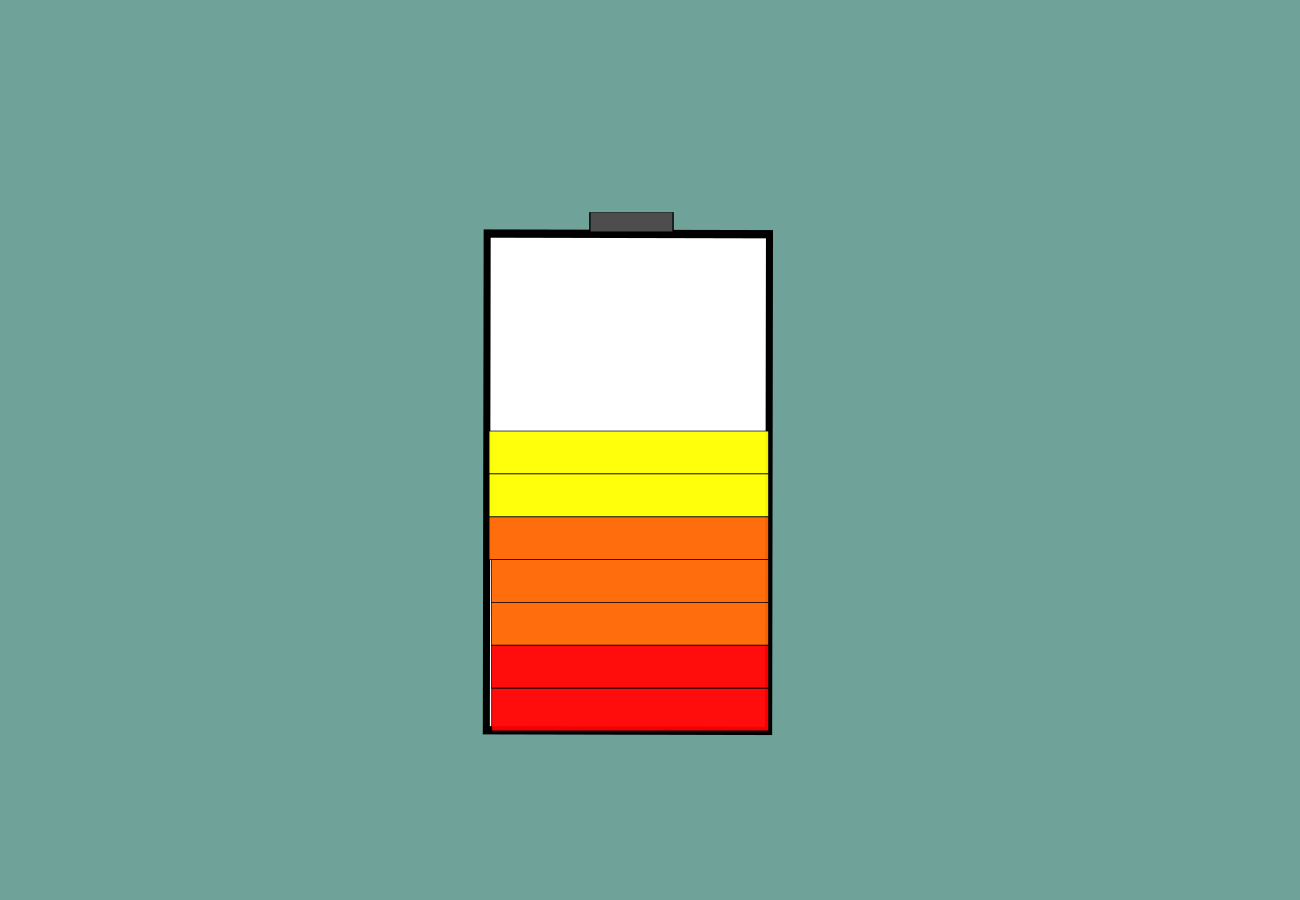
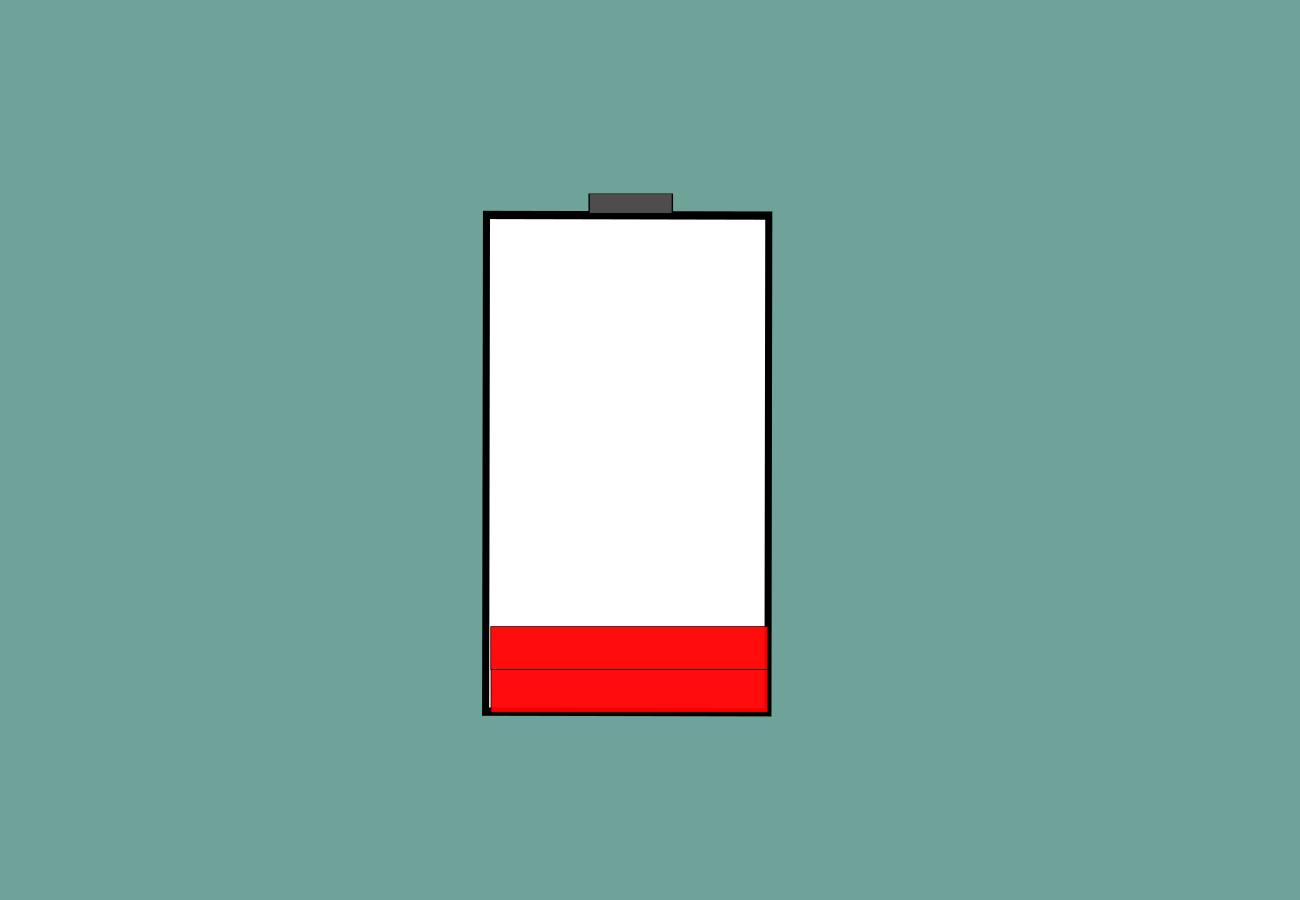
Concentration is like a rechargeable battery. The later we react to early warning signs of decreasing and lacking concentration, the longer the necessary charging time (the need for a break). Once the battery is “empty”, which in humans does not lead to “switching off”, we also have the problem of extended charging time. The longer we continue to work, the longer this becomes. Then we very often make another mistake. The long “loading time” (break), if it is taken, makes us nervous because the work stops. When we feel better again and the “first bar of the battery indicator flashes”, we usually think as follows: Now we can do something again. So much has been left undone. It’s best to get going again quickly. Our mental battery is then quickly drained again and we are once again confronted with a longer break, which is not possible at work; a vicious circle called burnout.
© 2025 PIRKA® Wolfgang Smidt. The content provided on this website is protected by copyright. Any use requires the prior written consent of the author. The information and advice provided has been compiled to the best of our knowledge and carefully checked. However, it is no substitute for expert psychological and medical advice in individual cases.
You can also use
PIRKA® Noticing work disturbances
PIRKA® Active reliefs that support our ability to concentrate
PIRKA® Noticing work disturbances
PIRKA® exhaustionE – Protocol 50-10 and 25-5
PIRKA® Hunger and ability to concentrate
PIRKA® observe, name and evaluate burnout
PIRKA® Understanding concentration problems and mental burnout
PIRKA® Early warning signs of decreasing concentration
PIRKA® Early warning signs of lack of concentration
Give it a try!
PIRKA wishes you every success in implementing it.
Literature
Abels, D. (1974). Konzentrations-Verlaufs-Test K-V-T. 2., verbesserte Auflage. Göttingen: Hogrefe.
Clos, R. (2004). Ein Leitfaden zur Diagnose und Behandlung der ME/CFS für den Arzt in der Praxis. Hrsg.: South Australian Department of Human Services, PO Box 287 Rundle Mall 5000, South Australia, Australia.
Demerouti, E., Fergen, A., Glaser, J., Herbig, B., Hofmann, A., Nachreiner, F., Packebusch, L. & Seiler, K. (2012). Psychische Belastung und Beanspruchung am Arbeitsplatz. Inklusive DIN EN 10075-1 bis -3. Herausgeber: DIN Deutsches Institut für Normierung e.V. Berlin: Beuth.
Dilling, H., Mombour W. & Schmidt M.H. (2011). Internationale Klassifikation psychischer Störungen. Göttingen: Huber.
Franke, G.H. (2002). Symptom-Checkliste SCL-90-R von L.R. Derogatis. Göttingen: Beltz.
Gaab, J. & Ehlert, U. (2005). Chronische Erschöpfung und Chronisches Erschöpfungssyndrom. Fortschritte der Psychotherapie. Göttingen: Hogrefe.
Kallus, K. W. (2011). EBF Erholungs-Belastungs-Fragebogen. Frankfurt: Pearson.
Luczak, H. (1989). Wesen menschlicher Leistung. Köln: Bachem.
Schmidtke, H. (1965). Die Ermüdung. Bern: Huber.